I had to dig out my old textbooks, read them again and understand the difference between accounting profit and cash flow.
Tellef Thorleifsson
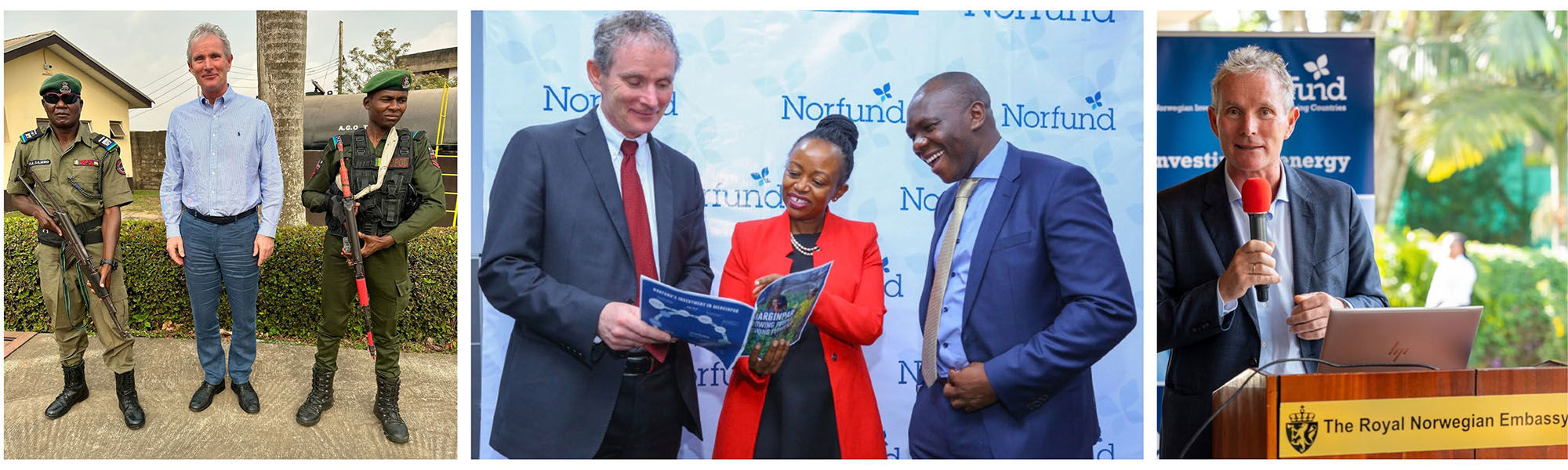
Tellef Thorleifsson has managed billions in venture capital and at Norway’s development finance institution. But as a student, he tended to cram for exams and admits that finance and accounting did not really click until he started working.
NHH has appointed an «Alumnus of the year» since 2018, et samarbeid mellom Alumnirådet og rektoratet ved NHH.
2018: Christoffer Pettersen
2019: Martin Schütt
2020: Rolv Assev
2021: Therese Jebsen
2022: Lars Erik Lund
2023: Madeleine Bjørnestad Røed
2024: Benedicte Schildbred Fasmer
2025: Jens Ulltveit-Moe
“Throughout his career, this year’s alumnus has combined value creation and social responsibility in ways that have made an impact both in business and in international development. He is a role model for today’s students and an outstanding example of how NHH alumni can contribute to value creation far beyond Norway’s borders,” said NHH Director of Communications Geir Mikalsen, explaining the choice of Tellef Thorleifsson, former CEO of Norfund.
“It is a great honour to be named Alumnus of the Year. I am proud of the recognition. It is inspiring to think that I can be a role model,” says Thorleifsson.
Early in his career, he helped establish Northzone, one of Norway’s first professional investment firms targeting high-growth technology companies. He later spent eight years as CEO of Norfund, the Norwegian Investment Fund for developing countries. Both organisations have helped pioneer new approaches to investment and development.
Thorleifsson admits that there were parts of finance and accounting that he did not fully grasp while studying. Without anything concrete to relate the theory to, he sometimes found the subjects boring.
I had to dig out my old textbooks, read them again and understand the difference between accounting profit and cash flow.
Tellef Thorleifsson
“It was only when I started working with venture capital that I really needed to understand the accounts of small companies. I had to dig out my old textbooks, read them again and understand the difference between accounting profit and cash flow,” says Thorleifsson.
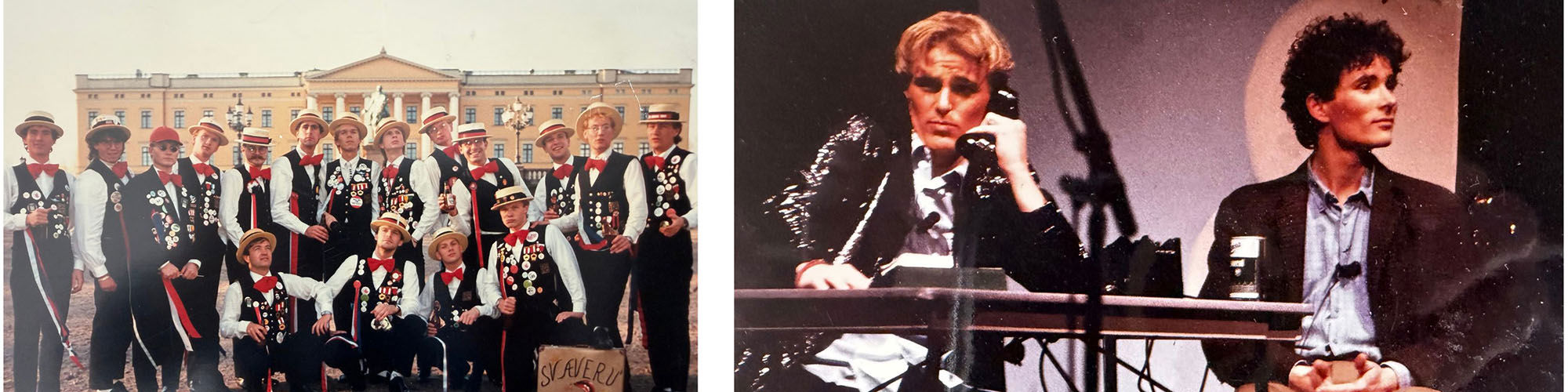
During his student years, he devoted much of his time to the social side of university life, including involvement in Svæveru’ and the student revue. Studying was often left until the last minute.
“But I learned a lot from those activities and from working with other students. Later, I realised they had also given me a network that has been valuable to me, even though I wasn’t conscious of it at the time,” he says.
Tellef Thorleifsson graduated from NHH in 1987. Just a few years later, the internet arrived and changed the world.
“We mortgaged our homes to the hilt so that we would have enough money to live on for a year, until we achieved positive cash flow.”
That is how he describes the beginnings of Northzone, the investment firm he co-founded in 1996. The idea was to invest in growth companies that could harness digital technology to create value.
The company was established with an initial fund of NOK 50 million. Today, it has EUR 2.5 billion under management and offices in several European countries as well as the United States.
Drawing on his experience as an investor and fund manager in technology companies, Thorleifsson also offers a warning about how Norway’s current tax rules affect such businesses.
“We used to have an active capital market for venture companies. It has now weakened considerably, and there is no doubt that the wealth tax is an important reason why,” says Thorleifsson.
He acknowledges that there are good reasons for having a wealth tax but argues that it makes Norway less attractive for investment. He says he meets entrepreneurs who are reluctant to start companies in Norway and instead choose Sweden. They worry that investors will see them as lacking ambition if they establish their businesses in Norway, he says.
Norfund has become an important government instrument for investment in developing countries.
“To create growth, you need businesses and infrastructure that generate jobs and help lift people out of poverty. Access to investment capital is absolutely crucial.”
This, Thorleifsson explains, is the fundamental idea behind Norfund, the Norwegian Investment Fund for developing countries. It is an approach that he now sees gaining increasing traction in Norwegian development policy, while also providing inspiration for other countries.
He particularly highlights investments in renewable energy production. Once such projects have been established and are generating energy, the fund can sell its stake and reinvest the proceeds elsewhere.
“Overall, the returns have been good, roughly comparable to those of Norway’s sovereign wealth fund. But on a risk-adjusted basis, Norfund and the sovereign wealth fund are not entirely comparable. Norfund invests in unlisted assets and in challenging markets. But the objective is to achieve the greatest possible development impact,” he says of the results from his eight years as CEO.
Tellef Thorleifsson left his position at Norfund earlier this year. Although he no longer wants a full-time position, he intends to remain active in projects and on the boards of companies that want to “make the world a little better”, as he puts it.
In that context, he remains convinced that an education from NHH provides a strong foundation.
“I fundamentally believe in the value of interdisciplinary expertise. In being trained to tackle large, complex problems and structure them. In understanding what is happening in technology, how technological change affects us and what it demands of us. I fundamentally believe in the kind of education NHH provides,” he concludes.