European super-grant awarded to Tungodden
Professor Bertil Tungodden has been awarded Europe’s most sought-after research funding, the ERC Advanced Grant. Only one other Norwegian researcher was awarded the grant.

NHH Professor Bertil Tungodden has been awarded NOK 22 million from the ERC to investigate a fundamental question in economics: When are markets morally legitimate?
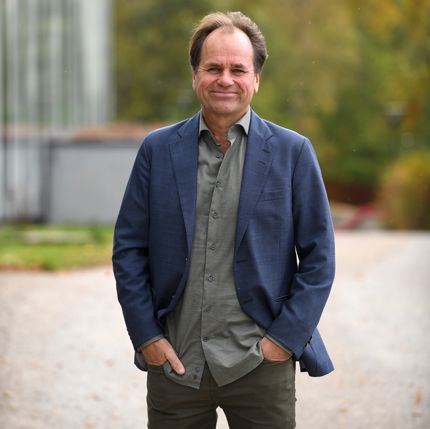
For the second time, NHH Professor Bertil Tungodden has received an ERC Advanced Grant, one of the most prestigious research grants in Europe. Historically, only three other Norwegian researchers have received an ERC Advanced Grant twice.
This time, he will study something economists have rarely examined systematically: when people perceive market transactions as fair (see fact box).
‘I was incredibly happy and proud. This is a major recognition, not only of what I have done, but of the entire research environment we have built at FAIR,’ says Tungodden, Professor at the Department of Economics and Director of the Centre of Excellence FAIR.
A record 3,329 proposals were submitted to this call, an increase of 31 per cent from last year. Only 9.6 per cent of the proposals were selected for funding.

Rector Helge Thorbjørnsen is delighted with the grant.
`Everyone at NHH is very proud of Bertil. Receiving an Advanced Grant once is a major achievement. Receiving it for a second time almost never happens. It says a great deal about the quality, originality and international significance of his research, ´ says NHH Rector Helge Thorbjørnsen.
`The project raises an important and fundamental question for economics, policymaking and society: When are markets perceived as fair and legitimate? This is research that goes straight to the heart of some of the most important debates of our time, ´ says the rector.
The first time Tungodden received an ERC Advanced Grant, in 2017, the project focused on how people assess inequality and distribution. This time, the starting point is different: When is a market transaction fair?
In economics, market transactions are often understood as voluntary agreements between buyers and sellers. When both parties consent to a transaction, it is therefore often considered legitimate.
‘That markets often contribute to the efficient use of resources and create value for both buyers and sellers is one of the most important insights in economics. At the same time, real-world markets are often complex, and it is not always obvious when a market transaction should be considered morally legitimate – or how people actually assess such questions,’ says Tungodden.
When people buy a home, take out insurance, take up a loan or book an airline ticket, the parties often have different information and different starting points.
‘The seller may have more information, while the buyer may be stressed, uncertain or have a limited overview. In such situations, it is not always obvious where the line should be drawn between a legitimate sale and the exploitation of the consumer,’ says Tungodden.
It is within this tension that the Fair Markets project is situated.
‘Markets play a central role in most societies and economies, and economists have studied them for more than a hundred years.’
‘Even so, we know surprisingly little about when people perceive market transactions as fair,’ he says.
The project builds on two central insights from behavioural economics: that people are not always fully rational, and that they care about fairness. At the same time, we know that in many markets, firms can profit from customers being short-sighted, stressed or inattentive. This raises fundamental questions about how people assess the fairness and legitimacy of market transactions.
Tungodden points out that the project can also be seen as a continuation of a classic question in moral philosophy.
‘Aristotle already distinguished between distributive justice and justice in transactions between people. My first ERC project was largely about distributive justice. Fair Markets is about the other side of this classic distinction: which market transactions people perceive as fair and morally legitimate.’

The examples are taken from markets most people are familiar with.
An airline ticket appears cheap, but gradually becomes more expensive as baggage, seat selection and other add-ons are included. The customer is already in the purchasing process when the price increases.
‘The question is whether customers perceive this type of sales strategy as fair and morally legitimate,’ says Tungodden.

The insurance market provides another example. Many people buy additional insurance products that offer limited extra protection compared with their cost. Such choices may be influenced by the fact that people find it difficult to assess probabilities and risk. The same applies to automatically renewed subscriptions, or credit cards that may be beneficial for some customers but costly for those who postpone payment. In such markets, firms can design products and sales strategies that exploit the fact that customers may be inattentive, lack self-control or have limited information.
Tungodden points out that economics has largely been concerned with efficiency and distribution: whether markets create value, and how that value is distributed between different groups.
But markets also raise questions about the moral legitimacy of the transactions that take place.
Bertil Tungodden
‘But markets also raise questions about the moral legitimacy of the transactions that take place. We still know surprisingly little about how people assess such questions, and which market transactions they perceive as fair and legitimate,’ he says.
‘Markets are among the most important institutions in modern societies. They contribute to value creation, innovation and the efficient use of resources. That is precisely why it is important to understand which market transactions and market practices people perceive as fair and morally legitimate. Trust in markets depends on people experiencing them as legitimate,’ says Tungodden.
The project will provide new knowledge about how people assess the division of responsibility between consumers and firms in the market. These are questions that are central both for authorities designing regulations and for firms seeking to build and maintain trust among their customers.
Tungodden believes the project can offer new insight into many of the most important economic and political choices people make.
‘A large body of research shows that people are not only concerned with their own economic interests. They also care about fairness and morality. Perceptions of which market practices are legitimate may therefore influence many of the choices we make as consumers, employees, investors and voters,’ he says.
Such assessments may affect which firms we buy from, where we want to work, which investments we support, and which regulations we want the authorities to introduce.
A large body of research shows that people are not only concerned with their own economic interests.
Bertil Tungodden
‘The debate about the ethical guidelines for the Government Pension Fund Global illustrates this well. Many people believe that returns are not the only thing that matters; how the money is earned also matters. In the same way, people’s perceptions of fairness and legitimacy in markets may influence many of the economic and political choices they make themselves,’ says Tungodden.
Over the next five years, he will map these attitudes and examine how they shape people’s choices, political preferences and views of markets.