
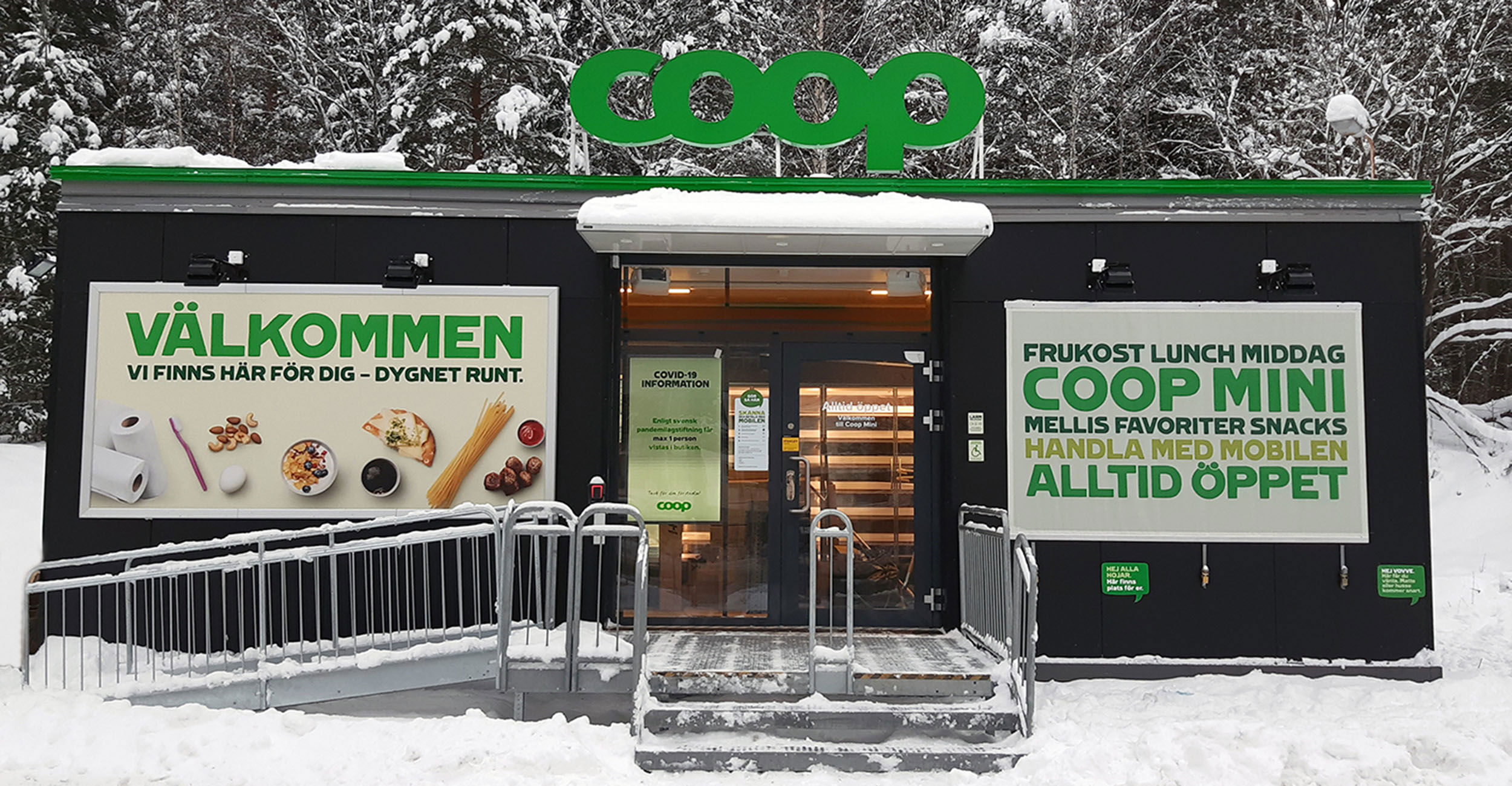
The Swedish Paradox: The number of grocery stores in Sweden is on the rise
While grim predictions of a massive wave of store closures long dominated the headlines, the Swedish grocery sector is now experiencing a historic shift in trends. The total number of physical retail outlets in the country is increasing! How is that even possible?
HUI Research, a consultancy, reports 8,816 stores in 2023, 8,837 in 2024, and 9,061 in 2025. At the same time, HUI emphasizes that this unexpected positive trend is largely driven by robust growth in the number unmanned stores.
What began just a few years ago as a somewhat peculiar, marginal pilot project led by small-scale tech entrepreneurs has matured at a rapid pace.
Today, there are hundreds of grocery stores across Sweden that operate – either entirely or partially – without any physical staff present on-site.
A complex mix
This wave of digital retail is fuelled by a complex mix of changing consumer habits, high labour costs, and smart technology. The breakthrough is primarily due to the Swedish population’s digital maturity and their strong trust in new technological tools.
To unlock the door, scan items, and complete a purchase, customers must verify their identity digitally using the Swedish "BankID" system. Because the system logs exactly who is in the store at any given time – linked directly to their personal identification number – shrinkage and theft are kept at a manageable level. This has made the business model economically viable for investors.
The technology has fundamentally changed the rules of the game regarding profitability in the industry. Traditional, full-service supermarkets require a substantial customer base to cover wage expenses, particularly during evenings and weekends. In contrast, unmanned modules and converted shipping containers entail minimal fixed operating costs.
In response to this trend, established retail giants such as ICA and Coop have launched major hybrid initiatives across the country. These allow stores to be staffed as usual during the day, while changing to unmanned operations during the evening and night. Simultaneously, chains consisting exclusively of unmanned stores – such as 24-Sju –have expanded rapidly, establishing over a hundred new locations in a brief period.
A "lifeline" for rural Sweden
Geographically, this technological innovation has become a "lifeline" for rural Sweden. While traditional local shops were previously forced to close their doors due to financial struggles and depopulation, these unmanned stores can remain viable even with an exceedingly small local customer base.
They provide residents with convenient, 24/7 access to essential groceries, sparing them the need to drive long distances to the nearest major shopping centers. What might initially have appeared to be a paradox during a challenging economic period has proven to be a highly logical market adaptation.
In short, widespread digitalization has breathed new, much-needed life into rural Sweden. It is hardly enough to "save" Swedish rural areas, but it is nonetheless a positive element in vulnerable regions.
In Norway, Coop executive Philipp Engedal earlier has expressed worry about local stores dying in rural Norway. Is what we now see in Sweden, the new solution to this worry when indeed Coop is also investing in unmanned stores in Norway these days?
Sources: SVT, Dagligvarunytt, HUI Research, Nettavisen, Coop, ICA, Axfood, 24-Sju.