
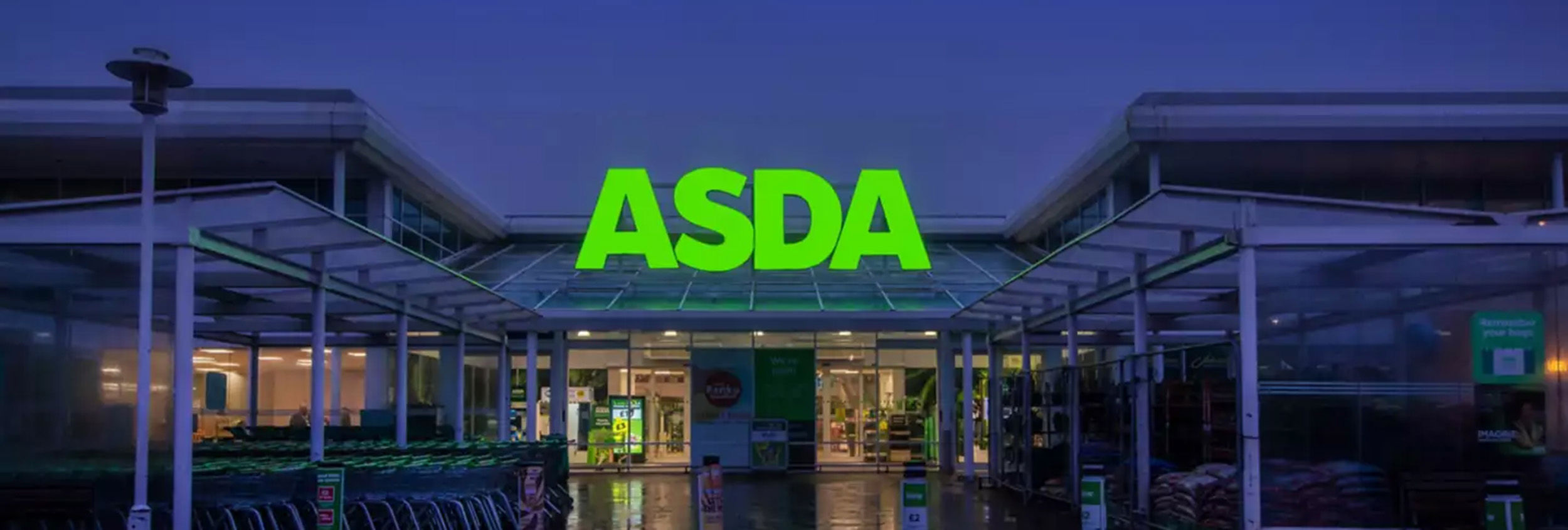
Sharp drop for ASDA
Britain’s supermarket chain Asda has reported a sharp 33% decline in annual core profit, a direct consequence of its aggressive price lowering strategy aimed at regaining customer loyalty in an increasingly competitive grocery market.
CURRENT OWNERSHIP OF ASDA
- TDR Capital – 67.5%
- Mohsin Issa – 22.5%
- Walmart – 10%
The former full owner retained a minority stake and a board seat after selling Asda in 2021.
If Asda succeeds in pairing its improved value proposition with stronger sales momentum, the current downturn may be remembered as a necessary reset. If not, the retailer may face deeper structural challenges in a grocery landscape that rewards efficiency, scale, and relentless price discipline.
The retailer’s leadership under CEO Allan Leighton has been explicit about the trade‑off: lowering prices to become 5–10% cheaper than traditional rivals would inevitably compress margins, and the financial impact is now fully visible in the latest results.
Asda’s adjusted EBITDA fell to £764 million in 2025, down from the previous year as the company pushed through widespread price cuts. Total sales excluding fuel dropped 3.3% to £21.0 billion, while like‑for‑like sales declined 3.1%.
Early 2026 continued to show negative momentum, though March brought a modest 1.2% uptick, suggesting early signs of stabilization.
Repositioning but do not win market share
The retailer’s strategy has succeeded in widening its price gap to 4–7% below competitors, a key milestone in its repositioning. However, this has not yet translated into regained market share. Industry data from early March shows Asda continuing to lose ground to rivals, despite improvements in customer satisfaction and product availability.
CEO Leighton has framed the price‑cutting initiative as a long‑term rebuild, estimating a five‑year horizon to restore Asda’s competitive strength. The logic is straightforward: in a market where discounters like Aldi and Lidl continue to pressure traditional grocers, Asda must reassert its value credentials to win back cost‑conscious shoppers.
The retailer’s ownership structure also plays a role. Asda is majority‑owned by TDR Capital alongside Mohsin and Zuber Issa, who acquired 90% of the business from Walmart in 2021. Servicing the debt from this leveraged buyout has added financial strain, limiting flexibility during a period of margin compression. Asda’s net debt stands at £3.1 billion, though this is £500 million lower than the previous year.
Operational Adjustments and Challenges
Beyond pricing, Asda has undergone significant operational changes. In August, it completed a major IT separation from former owner Walmart, a complex transition that temporarily disrupted operations – particularly in online grocery, where sales remain “inhibited a tad,” according to Leighton.
Despite these challenges, the company highlights progress in key areas such as availability, customer satisfaction, and price perception. Yet the central question remains: Can Asda convert these operational wins into sustained sales growth?
Outlook
Asda’s price‑lowering strategy is a calculated gamble: sacrificing short‑term profitability to rebuild long‑term competitiveness. The 33% profit slump underscores the cost of this approach, but the retailer appears committed to the path. With market share still slipping, the coming year will assess whether the strategy can shift consumer behaviour enough to justify the financial pain.
Asda's current market share is around 11.6-11.8% of the UK grocery market. This makes Asda the third largest supermarket chain in the UK, behind Tesco and Sainsbury's, but ahead of Morrisons, according to Kantar.
Sources: Globalbankingandfinance.com, Asda, Kantar.