
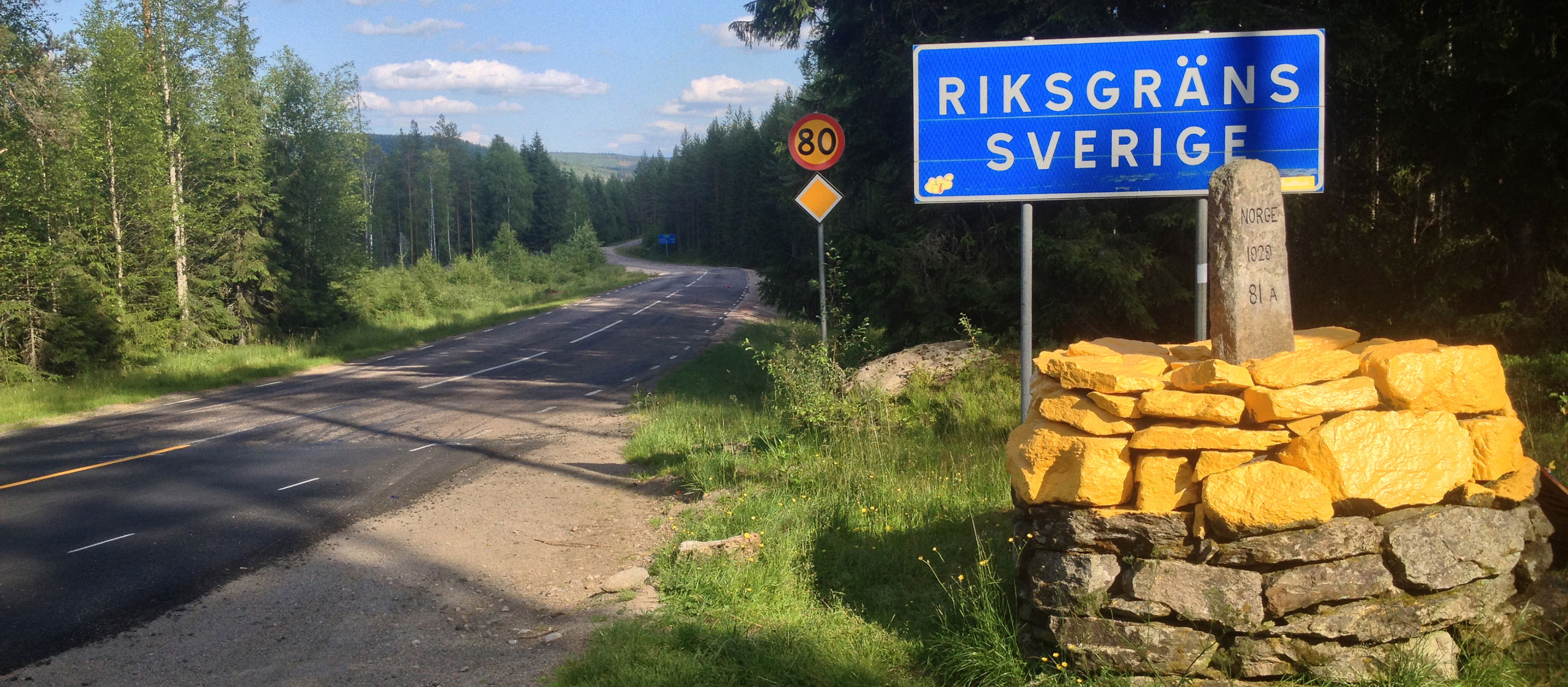
Reduced VAT in Sweden lowers prices
Cross-border trade with Sweden is growing to new heights, worrying the food industry, grocery chains, and politicians alike. Yet the Norwegian government is hesitant to take measures to reduce the leaks.
The trade newspaper, Fri Köpenskap, writes that Coop Väst's cross-border retail company Grensemat AB, increased its group turnover by 134 million or 5.2 percent in 2025. The growth is even stronger in 2026 according to Swedish Coop.
The company operates three stores: Nordby Supermarket, Maximat Nordby and Maximat Svinesund and benefits from Sweden's reduction of VAT on food from 12 to 6 percent.*
Dynamic effects
It is interesting to note that the reduction also has dynamic effects that push prices down even further because retailers in Sweden refuse to accept price increases from suppliers. The chains point to the VAT reduction and argue for moderation in order to prove that reduced VAT is working according to the Swedish government's intentions.
According to a report from the food industry two out of three member companies state that at least one of the three major grocery players has referred to the VAT reduction as a reason for not accepting higher delivery prices. Almost half state that they met the argument from all three.
At the same time, consumer food prices have fallen. According to SCB statistics, food prices fell by between 5.7 and 7.2 per cent during April–July compared to the corresponding months the year before. That is, more than the VAT reduction's effect, which is estimated at 5.4 per cent.
The development is taking place at the same time that six out of ten food producers surveyed state that production costs increased during the first half of the year.
“The VAT reduction should strengthen the household's purchasing power. Instead, we see it being used as an argument by the trade to stop the necessary price adjustments from producers, despite the fact that their costs continue to rise,” says Carl Eckerdal, chief economist at Livsmedelsföretagen.
“When costs increase but food prices are depressed, eventually the situation becomes unsustainable, especially for all the small and medium-sized companies that are already struggling with minimal margins,” argues Eckerdal.
Growing to new heights
Meanwhile, cross-border trade is growing to new heights to the benefit of Norwegian consumers in Halden, Sarpsborg and Moss. The losers are Norwegian chains and Norwegian suppliers. And the Norwegian state, which loses tax revenue.
The Norwegian grocery store chain Bunnpris had a turnover of 8 billion NOK in 2025
In a way, you can say that Norway has five chains: NorgesGruppen, Coop, Rema 1000, Bunnpris and "border trade", where border trade has now more than half of Bunnpris in turnover.
Norwegians spent NOK 2.5 billion on day trips abroad in the first quarter of 2026 alone. The interest group Virke points to a mix of economic and political facts that drives cross-border trade with Sweden.
- Structural leakage — cross-border trade has become a permanent outflow of Norwegian grocery kroner.
- Large price gap — taxes + Swedish food VAT 6% makes Sweden systematically cheaper.
- More per trip — fewer trips, but larger shopping baskets.
- Swedish hypermarkets — Nordby/Maximat offer a wider range than Norwegian stores.
- Currency effect gone — strong Swedish krone does not stop trade.
- Losses for Norwegian trade — stores, wholesalers and jobs are weakened.
- Lost taxes — billions in VAT and excise duties are moved out of the country.
- Political failure to act — the measures are small and ineffective.
- Need for strategy — Virke calls for a comprehensive reform of taxes and framework conditions
Virke has many important points, but the main driver of cross-border trade is actually that Norway is outside the EU – as the only country in Scandinavia. And that the main reason we are outside EU is the protection of Norwegian agriculture and, in a broader sense, the protection of Norwegian regional policy.
It is also important to note that both COOP and Norgesgruppen are represented on the other side of the border with several large border stores (eg., Eurocash and Maximat stores).
The advantage of cross-border trade leakage is that it dampens Norwegian inflation. The disadvantage is lost jobs and tax revenues on the Norwegian side of the border. In the short term, Norwegian authorities will sit completely still, this writer believes. Therefore, there is reason to believe that the queues at the Swedish border will increase in the foreseeable future.
*Food VAT in Sweden is now 6%. This was halved from 12% to 6% from 1 April 2026 and applies temporarily until 31 December 2027. In Norway, the food VAT is 15 percent and there is little political will to lower it.