Norges Bank could take on greater responsibility for Oil Fund ethics
An expert committee recommends giving Norges Bank greater responsibility for following up companies in the fund’s portfolio.
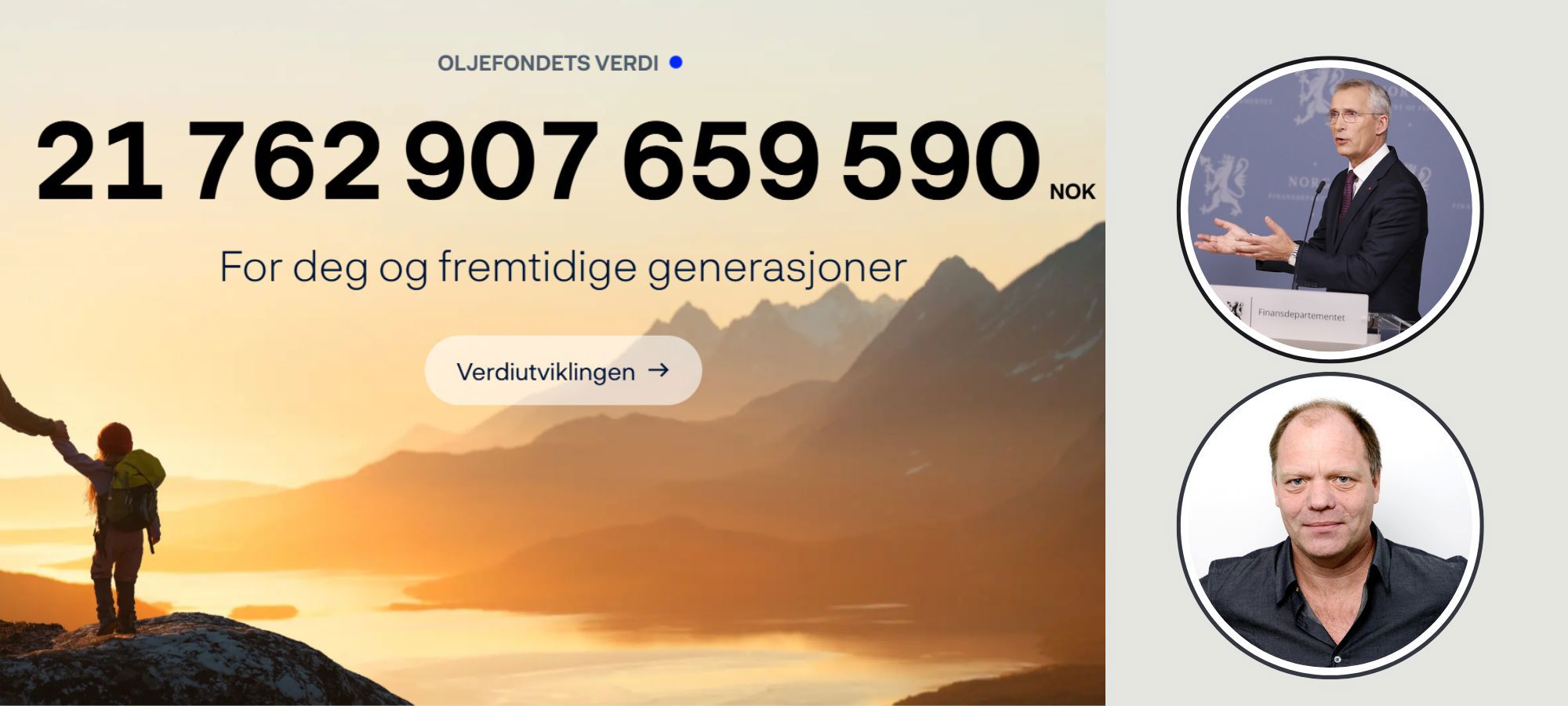
On Thursday this week, the expert committee submitted its report, “Responsible Financial Management” (NOU 2026: 11), to Minister of Finance Jens Stoltenberg.
Alexander W. Cappelen is one of the committee’s nine members. The committee has been chaired by former Governor of Norges Bank Svein Gjedrem. Cappelen is a professor at the Department of Economics and a researcher at Norwegian Centre of Excellence FAIR.
The world’s largest sovereign wealth fund
The committee has reviewed the ethical framework for the Government Pension Fund Global, commonly known as the Oil Fund.
One reason for the review is that the fund has become substantially larger and more important to Norway’s welfare, while the geopolitical situation has also become more challenging. The fund currently invests in more than 7,000 companies in nearly 70 countries. It is the world’s largest sovereign wealth fund.
One of the committee’s most important proposals is that, as a general rule, Norges Bank should first seek to influence companies through active ownership if the Council on Ethics identifies a risk of serious breaches of ethical standards. Exclusion should remain an option if engagement does not produce results.
At the same time, the committee proposes changing the division of responsibilities between Norges Bank and the Council on Ethics.
NOU 2026: 11
In the committee’s view, it is important to strike an appropriate balance between the fund’s two ethical obligations. The proposed guidelines are intended to facilitate this:
- The fund should be a responsible financial investor. First, it should contribute to welfare for both present and future generations.
- At the same time, the fund should seek to avoid investments in companies where there is an unacceptable risk that they contribute to, or are themselves responsible for, serious breaches of ethical standards.
The Council on Ethics would remain professionally independent and continue to assess the risk of serious breaches of ethical standards but would no longer recommend which measure should be used. Norges Bank would be responsible for choosing between measures including active ownership and exclusion.
Changes to the nuclear weapons criterion
The committee also proposes a significant change to the criterion governing investments in companies that produce nuclear weapons.
The fund would continue not to invest in producers of nuclear weapons, but an exception would be introduced for companies based in nuclear-weapon states that are parties to the Treaty on the Non-Proliferation of Nuclear Weapons and are also allied with Norway.
This would mean that several US and European defence companies currently excluded from the fund could become eligible for investment again. The committee points, among other things, to the changed security policy environment and the importance of NATO’s nuclear deterrent.
Members of the committee:
Svein Gjedrem (Chair), Annie Bersagel, Alexander Wright Cappelen, Gunhild Hoogensen Gjørv, Hanne Eggen Røislien, Marius Emberland, Arthur Sletteberg, Ulf Sverdrup and Karen Helene Ulltveit-Moe.
The committee also believes Norges Bank must be better prepared for rapid changes when conflicts escalate into war. The Bank should plan for and rehearse different scenarios so that it can respond quickly.
At the same time, the importance of transparency is emphasised. Information about which companies are excluded from the fund, and the reasons for their exclusion, should continue to be made public.