Norway’s group is one of the fairest
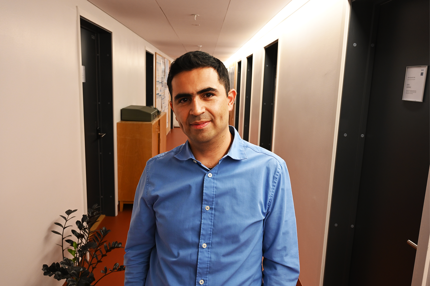
Mario Guajardo

Ødegaard and Norway could benefit from an overlooked World Cup advantage: They face far less travel than many of their rivals.
The countdown is on. The World Cup kicks off on June 11, with the final set for July 19 at MetLife Stadium.
Much has been said about injuries, sky-high ticket prices and extreme heat.
But one factor has largely gone under the radar: travel.
Norway’s group is one of the fairest
Mario Guajardo
The tournament spans three countries and four time zones, from Vancouver in the north to Mexico City in the south. That could directly influence who lifts the trophy.
'Research shows that traveling across time zones is perceived by athletes to negatively affect recovery, sleep quality and overall physical performance due to fatigue,' says NHH professor Mario Guajardo.
He specializes in logistics and match scheduling.
'Large and uneven travel distances can mean teams enter matches with different physical conditions,' he adds.
In a new discussion paper, he has analyzed the travel burden for all teams.
Norway comes out among the most fortunate teams.
With a total of just 550 kilometers between matches, Norway ranks sixth among teams with the least travel. Ståle Solbakken’s side also avoids crossing any time zones.
'Norway is in a good position. That could be an advantage,' says Guajardo.
In the group stage, the playing field is relatively level. Senegal and France face similar travel demands.
'Norway’s group is one of the fairest,' he notes.
If Ødegaard, Haaland & co advance, the advantage increases—especially if they win their group.
'In that case, Norway could remain in the same time zone all the way to a potential semifinal,' says Guajardo.
That is far from the case for everyone.
England and Germany are among the favorites who must travel the most—up to five times as far as Norway. Both will also have to cross time zones.
In several groups, the disparities are striking:
Led by Jørgen Strand Larsen and Antonio Nusa, Norway at times outclassed Sweden at Ullevaal recently. But Guajardo’s analyses show that Sweden at least comes out relatively well in terms of the match schedule.
The calculations do not include travel to and from the teams’ respective base camps, only travel between match cities.
Experts consider Sweden’s group fairly tough, with the Netherlands, Japan and Tunisia as opponents. But the Swedes have the shortest travel distance of all teams, for example more than 600 kilometers less than Japan.
Overall, the tournament schedule for the 2026 World Cup gives teams different conditions for success.
'Even small differences in travel load can make a difference in a demanding tournament,' says Guajardo.

Teams will have to switch time zones between matches 29 times during the tournament.
Guajardo’s calculations show this could be reduced to 20 with a more flexible schedule – cutting roughly 14,000 kilometers of travel in the group stage (around 14 percent).
Still, he does not criticize FIFA.
'FIFA has made a serious effort. But with a tournament spread across three countries, it is almost impossible to achieve a perfect solution,' he says.