It’s not stand-up. But it’s enough to lighten the mood.
Gisle Andersen
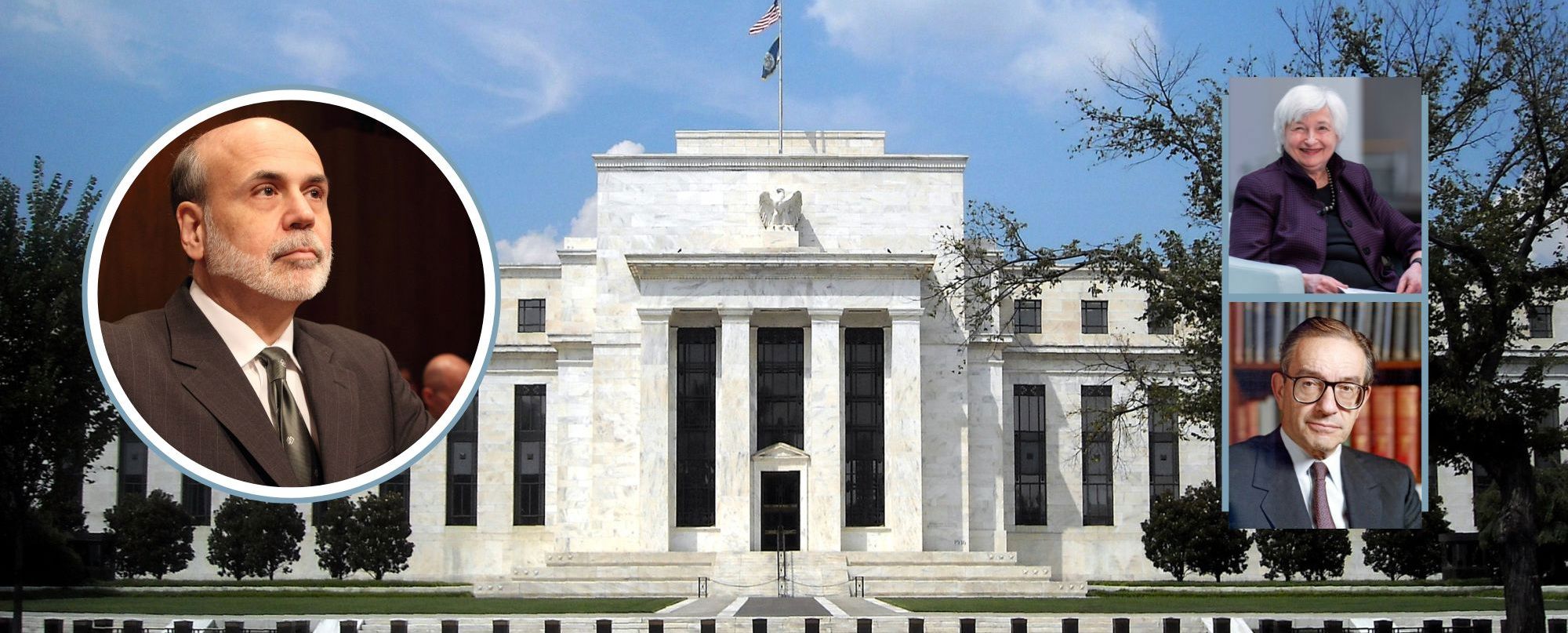
In meetings at the US central bank, laughter is not just atmosphere – it is a signal. A new study shows how humour is linked to leadership style.

There are many subtle signals of power in a meeting. One of them is who gets the room to laugh.
At the US central bank, Ben Bernanke stood out as the leading humourist.
`We can understand quite a lot about people’s leadership style by studying humour´, says Gisle Andersen, Professor at NHH.
Bernanke served as Chair of the Federal Reserve from 2006 to 2014, a period marked by the financial crisis. Yet it is in his meetings that researchers find the most laughter – and most often initiated by him.

Together with Associate Professor Christian Langerfeld, Andersen analysed around 11 million words from transcripts of the Federal Open Market Committee (FOMC) meetings between 1987 and 2017.
`Laughter is not random. It tells us something about how meetings are led. Humour and laughter occur regularly but are used differently by different central bank chairs´, says Andersen.
`We show how leadership style can be observed through small, concrete signals: who initiates laughter, where in the meeting it occurs, and how these changes over time and context. Humour reveals how authority, trust and participation are managed in the room´.
Even in what may be the world’s most serious meeting room, at the US central bank, humour plays a larger role than one might expect.
In the new study, Andersen and Langerfeld examined detailed transcripts of interest rate meetings over a 30-year period. During these decades, the Federal Reserve was led by Alan Greenspan, Ben Bernanke and Janet Yellen.
`Humour and laughter occur regularly. They are part of how meetings function´.
Among the three chairs, Ben Bernanke stands out clearly. He had the highest number of recorded instances of laughter in his meetings and was also the one who most often initiated it himself.
It’s not stand-up. But it’s enough to lighten the mood.
Gisle Andersen
Adjusted for speaking time, Bernanke initiated laughter about 2.5 times as often as Janet Yellen.
Greenspan lies at the other end of the scale. His meetings contained, on average, the fewest humorous instances, although variation from meeting to meeting was high. For Yellen, the pattern was different: less variation, less humour and laughter, and no clear trend over time.
Humour at the central bank is rarely the kind that makes a room burst out laughing.
`The most common form is short one-liners, what we call “quips”. A quip is a brief, humorous remark in the middle of a technical discussion, before the meeting moves on´, says Andersen.
`Occasionally, participants also tell anecdotes or short stories with a humorous point, but this is less common´.
When one participant noted that a calculation should be taken “with a grain of salt”,
Alan Greenspan replied:
“You put down finger-crossing as a serious econometric technique. I want to communicate that in my experience the t-value is quite high.”
The transcript notes: “Laughter”.
The most common form is short one-liners, what we call “quips.
Gisle Andersen
In another example, Bernanke summarises the outlook across US regions:
“I have in my notes ‘apprehensively optimistic’, and ‘cautiously optimistic’, and then I have here ‘then there’s Texas’.”
`It’s not stand-up. But it’s enough to lighten the mood´, says Andersen.
Research on workplace humour often shows that jokes can be used to put people in their place, soften criticism or assert dominance.
`We see little of that here. The humour is largely supportive, says Andersen.
Instead, it is mainly used to create a lighter atmosphere, build collegiality and manage pressure in a setting characterised by high stakes and demanding decisions´.
Humour also changed with circumstances.
When the global economy is under pressure, there is simply less room for witty one-liners.
Gisle Andersen
For Bernanke, there is a high level of laughter early in his tenure, followed by a marked decline during the financial crisis.
`When the global economy is under pressure, there is simply less room for witty one-liners´, says Andersen, adding:
`Who initiates laughter, how it is used and when it occurs tells us something about authority, trust and participation in the room´.
Meetings are not only about decisions, but also about how people read each other – and who sets the tone.
`A well-timed remark can do more than make people laugh. It can ease tension, bring the room together – and signal who is in control´.