It is in these journals that the most important debates in the field take place.
Kjell Gunnar Salvanes

Over the past 20 years, NHH professor Kjell G. Salvanes has published research in the world’s most prestigious economics journals 24 times. That record has made him the highest-ranked economist in Norway.
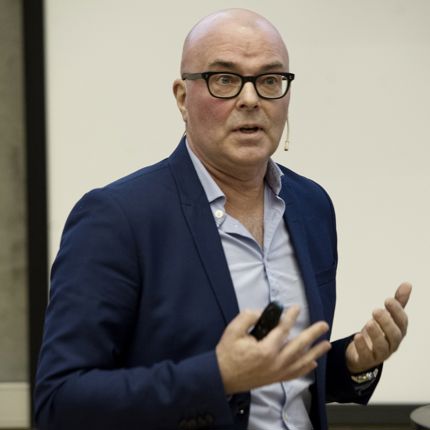
Over the past 20 years, NHH professor Kjell G. Salvanes has published research in the world’s most prestigious economics journals 24 times. That record has made him the highest-ranked economist in Norway.
`I have a genuine interest in understanding how society works—how decisions are made, and how institutions and frameworks shape those decisions. That is my driving force, says Kjell G. Salvanes, professor at the Department of Economics and the Norwegian Centre of Excellence FAIR.
Publishing at the very top level of the economics profession is extremely demanding. For most researchers, it happens once or twice over an entire career, if at all. At this level, authors receive the most demanding feedback from editors and referees, and thus the opportunity to contribute research of the highest quality.
`It is in these journals that the most important debates in the field take place. Publishing there gives you the opportunity to influence how disciplines develop, ´ says Salvanes, adding:
`Yes, it is demanding—but also highly rewarding. For me, it has become a lifestyle, with many hours of work each day and, at times, tough priorities. ´
It is in these journals that the most important debates in the field take place.
Kjell Gunnar Salvanes
Salvanes’ areas of expertise include labour and education economics, with a particular focus on social mobility and inequality.
Each December, NHH awards publication bonuses to researchers who publish in the world’s leading economics journals. This year, a record number of NHH researchers received bonuses. Salvanes alone received three bonuses, an exceptionally high number.
Over the past 20 years, no one has received more publication bonuses than him.
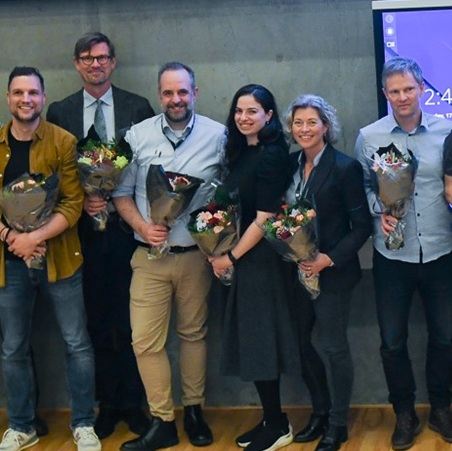
With 24 publications in the world’s top economics journals over 20 years, Salvanes has become Norway’s most cited economist, according to this ranking.
He points to one main explanation:
`I am deeply interested in research within my field and in understanding the mechanisms of the economy and society more broadly. I try to understand why so many people struggle in the labour market, why some families fail to get ahead across generations—whether in education or employment. Parents struggle, and their children often follow the same pattern. What lies behind this? And why do some succeed consistently? Understanding these mechanisms is essential for designing policies that reduce inequality. ´
Understanding these mechanisms is essential for designing policies that reduce inequality.
Kjell Gunnar Salvanes
`But finding the right research questions that will occupy your research life for years—how do you know when you have a good idea? ´
`That is the challenge—and what economists call the scarce factor. And at the same time, the most important one. All serious research environments have access to good data. But formulating a research idea clearly enough, choosing the right data and methods to answer the question well, and then communicating both the idea and the results is both challenging and rewarding. ´
American Economic Review, Econometrica, Journal of Political Economy, and the American Economic Journal series are among the journals at the very top of the wish list for economists worldwide.
Many of the journals in which Salvanes has published reject 95 percent or more of submitted manuscripts.
Asked how he has succeeded time and again, Salvanes points to a strategic choice made at the Department of Economics in the early 2000s. At that time, several researchers wanted to take part in the truly major academic debates.
We wanted to build on the legacy of Agnar Sandmo.
Kjell Gunnar Salvanes
`We wanted to build on the legacy of Agnar Sandmo. To do that, we had to publish in the very best journals. These are the articles that have the greatest influence in the research community—because they are noticed, read, and widely cited. We were highly motivated to achieve this, and together with genuine academic curiosity, it became a powerful driving force for me. ´
The establishment of the Centre for Advanced Research at NHH (FAIR) in 2017 has also played a significant role in Salvanes’ academic career. He is one of the centre’s academic leaders. FAIR has two main research tracks: labour economics and behavioural economics.
`I work with extremely ambitious researchers at the centre. Building FAIR has been very important for me and my closest colleagues. ´

Salvanes frequently takes part in public debates on education, labour markets, and schooling, and he always responds when journalists call—provided the discussion is grounded in research. Over the past 20 years, he has served on around ten expert committees.
`The societal contribution of research is important. ´
NHH rewards researchers who publish in leading international outlets. A publication in a journal listed by both NHH and the Financial Times triggers a bonus of NOK 200,000. Researchers receive a share of this amount, often split among three co-authors, which typically amounts to less than NOK 70,000 before tax.
`Do I do this for the money? If I wanted to become wealthy, I could have focused on consulting. But that would have come at the expense of research. ´
Salvanes believes that NHH’s decision, made more than 20 years ago, to introduce publication bonuses remains just as valid today:
I work with extremely ambitious researchers at FAIR.
Kjell Gunnar Salvanes
`When NHH awards bonuses for top-level publications, it sends a clear message that the highest possible quality matters. Of course, publishing is expected in this type of job. But the system also sends a strong signal that quality is both desired and expected.´
High-level research is essential for a small country like Norway, Salvanes argues.
`As a country, we do not spend excessive amounts on research, and perhaps we specialise too little. ´
It is therefore crucial that Norway has researchers with access to the very best international academic environments.
`Because researchers bring knowledge back with technology, of course, but also insights into how societies and institutions are organised. These impulses benefit society. And you simply won’t gain access to these environments unless you have something to show, ‘the NHH professor concludes.