
How ports can secure electricity at lower prices
NHH PhD candidate Mengjia Dai has investigated how ports can secure enough electricity at the lowest possible cost. Her research has now won an international shipping award.
An example: Shore Power
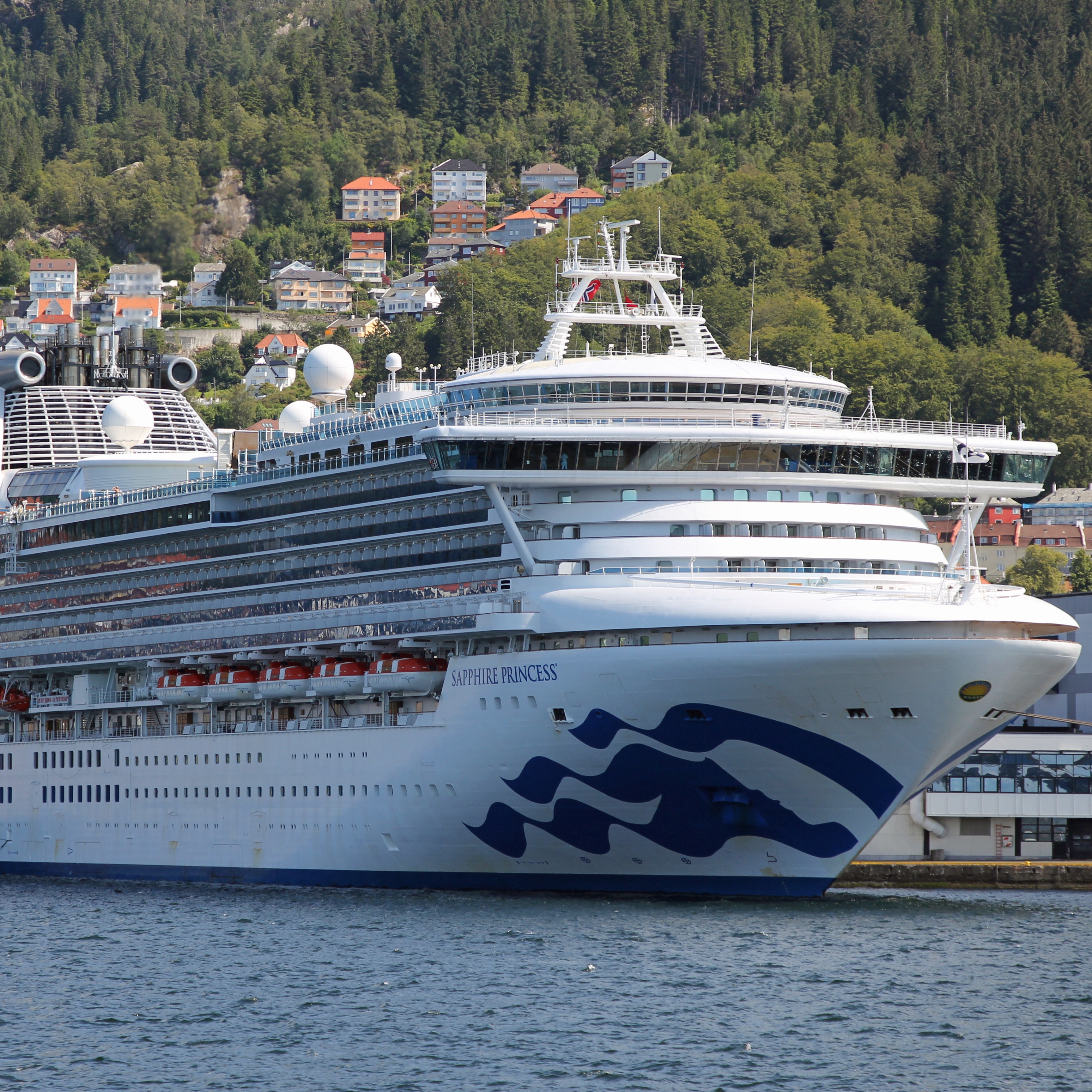
- Five of Norway's largest ports – Bergen, Ålesund, Oslo, Kristiansand and Haugesund – can now provide shore power to cruise ships. This allows ships to switch off their diesel engines and connect to electricity supplied from land.
- Bergen has Europe's largest shore power facility for cruise ships. Three cruise ships can use the facility simultaneously.
- A cruise ship at berth can draw 15,000 kW of power. In one hour, it can therefore consume as much electricity as an average Norwegian household uses in an entire year.
‘Many research papers assume that ports will need increasing amounts of electricity. But the fundamental question is: Where will the electricity come from?’
This is according to Mengjia Dai, a PhD candidate at the Department of Business and Management Science at NHH.
As ships switch to shore power and cranes, vehicles and other port equipment are electrified, demand for electricity is expected to rise sharply. According to estimates cited by Dai in her research, electricity demand could increase four- to sixfold.
This presents ports with new challenges: How can they secure enough electricity, and which solutions are the most cost-effective?
These are the questions addressed in the research «Electricity Sourcing for Green Ports: A Markov Stackelberg Game Approach».
Dai received first prize in the PhD Best Paper Competition at the annual conference of the International Association of Maritime Economists (IAME).
Better electricity contracts
‘Ports cannot always obtain all the electricity they need directly from the grid. They therefore have to look for other solutions,’ Dai explains.
She examines how ports can combine electricity purchases from the spot market, long-term power purchase agreements and their own renewable energy generation.
One of the findings is that ports with large and predictable electricity demand can negotiate more favourable long-term agreements with electricity suppliers. When suppliers know that a port will purchase substantial amounts of electricity over an extended period, investing in additional electricity generation becomes more attractive. This can, in turn, lead to lower prices for ports.

‘An important part of the research is understanding how ports' decisions are influenced by electricity suppliers, and how the two affect each other,’ says Dai.
Uncertainty about future electricity prices
Together with her main supervisor, Professor Haiying Jia, Dai has developed a mathematical model that examines how ports and electricity suppliers make decisions when future electricity prices are uncertain.
Should a port enter into an agreement to purchase electricity for many years ahead, or buy electricity as and when it is needed? The researchers find that considerable uncertainty about future electricity prices can make it more difficult for ports to secure favourable long-term agreements.
At the same time, ports that generate some of their own electricity, for example using solar panels, can become less dependent on long-term agreements.
‘We account for uncertainty about both future electricity prices and how much electricity ports will need. This makes the model more relevant to the decisions ports actually face,’ says Dai.
Developments in Bergen
Dai has also been in contact with companies involved in supplying shore power in Bergen.

‘We spoke to one of the companies supplying shore power to ports in Bergen. It was interesting to see how much is already being done to develop greener ports.’
She highlights the expansion of shore power facilities (see fact box) as an example of how ports are working to reduce emissions from shipping. The research forms part of her PhD project on energy transition in ports. The idea emerged when Dai, who has a background in shipping, took a course on electricity markets at NHH.
‘I had heard a lot about the electrification of shipping but knew very little about electricity markets. After taking the course, I started wondering whether it would be possible to combine these two fields.’
She discussed the idea with her supervisor, and it became the starting point for her research project.
‘A great encouragement’
Winning first prize at the international conference came as a surprise.
‘I was very happy. I have spent a lot of time working on the paper and faced quite a few challenges along the way. My supervisor has also put a great deal of effort into the work and given me tremendous support.’
Dai admits that she has sometimes questioned how relevant her research would be to others.
‘At times, I have wondered how useful this research really is. That is why receiving this kind of recognition from other researchers means so much to me. It is very encouraging.’