We lie for those who are like us
Three experiments with more than 5,000 participants show that people are willing to cheat if it benefits their group — even when they gain nothing themselves.
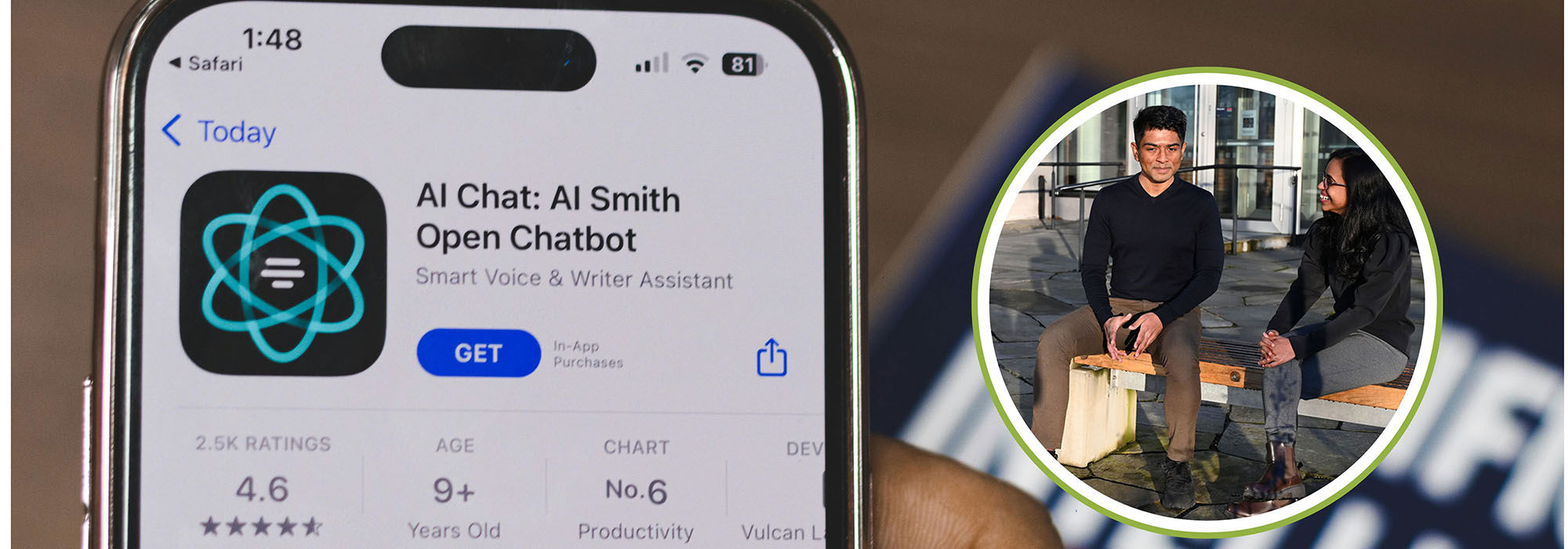
Chatbots save time and money, but elite customers hate them — not because they fail, but because they flatten status. New NHH research explains why.

Everybody likes humans more than chatbots. We want to feel seen, special, and that we matter to those we interact and do business with.
`For high-status clients, this feeling is even more important. Talking to a human rather than AI-driven chatbots has become the new status symbol´, Assistant Professor Aruna D. Tatavarthy says.
Earlier this year NHH and DIG researchers Tatavarthy and Assistant Professor Jareef Martuza, together with Professor Helge Thorbjørnsen, published a paper in the Journal of Interactive Marketing on why we dislike chatbots.
For customers who pay for platinum cards, service is not just about solving a problem. To them, a chatbot can feel like a step down in rank, a new NHH study shows.
As banks, airlines and other service industries shift customer services to AI and chatbots, a paradox appears: People dislike chatbots even if they solve every problem perfectly.
`The customers who resist them most strongly are the elite segment – the ones that businesses can´t afford to lose - are the least satisfied of all´.
Chatbots don’t offer customers a sense of uniqueness.
Clients, and especially elite clients, want to feel special and valued. They need to hear and feel that they are not just one in a crowd. The value of customer service relations is not just in the solution, but also in the process.
A chatbot, no matter how effective, tends to dampen that experience.

Tatavarthy points out that there is a cost to introducing chatbots that businesses often overlook.
`If you employ chatbots to handle all clients, who do you lose? If many of your customers are in the elite segment, then that is a significant cost´.
She argues that firms must consider:
`These are considerations businesses must make´, she says, and adds:
`If elite customers are charged a premium for access to human services, then the business also needs to make sure their high-status clients feel the bonus they get is worth the premium´.

Several hotels, airlines clearly list 24/7 dedicated human customer service support as part of the exclusive perks.
`This makes the basic service feel worse in comparison. When people clearly see this contrast of benefits, then access to human customer service support becomes an important signal of status that elite customers value’.
Their research shows that there are also some simple steps the businesses can take to mitigate the negative reactions to chatbots. The best approach is to let the chatbots provide the feeling of uniqueness that is craved by so many customers.
Simple interventions such as mentioning that the chatbot is ‘personalized’ to the customer’s unique tastes, is a ‘premium’ version, or highlighting that it is `highly rated´ reduce the chatbot-bias.
‘Negativity toward chatbots can reduce by up to a one-third with these interventions´, Assistant Professor Jareef Martuza tells.
Human Is Gold: Why Premium Customers Hate Chatbots and What to Do About It, in the Journal of Interactive Marketing (2025), containing three main studies and three supplementary studies, with more than 4 000 study participants (US-based customers in retail banking and airline services). All researchers at Dep. of Strategy and Management, NHH.
Going forward, the researchers expect a balancing point as people are getting more digitally fluent.
` Experimentation is key for many service providers. Things are changing fast. We will see many cool things and bad things. What works in the end will depend on how people react to different things, making it important to study the psychology of technology´, Martuza continues.
Tatavarthy and Martuza concludes that as people become more digitally skilled, they are likely to “catch up” with the AI-agents and chatbots, and the transition will occur when convenience beats the human touch.
`The way forward to keep the elite customers happy lies in remembering where the loyalty comes from and developing unique clublike concepts for that signal they are not “one among the crowd´, they conclude.