He embraces AI, but holds back on tech stocks
Nvidia’s rollercoaster has rattled markets. But Norway’s Oil Fund has a little-known «AI shock absorber» that could soften the blow.
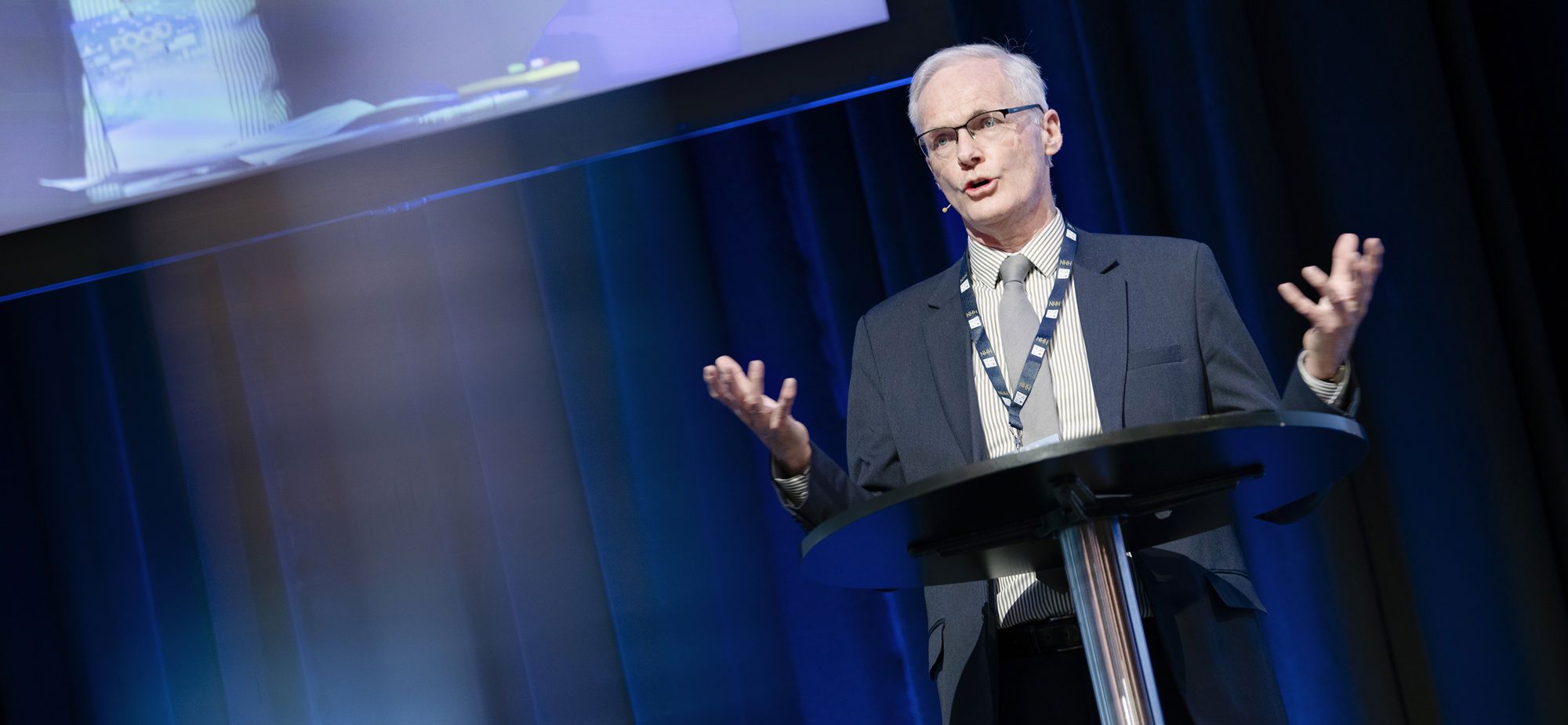
Last year, tech giants led by Google and Meta generated NOK 13.5 billion in revenue from the Norwegian advertising market. The country’s newspapers were left with NOK 3.7 billion. ‘The media landscape has changed dramatically,’ says Lars Sørgard.
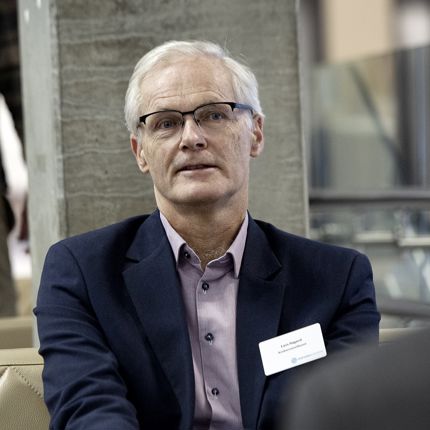
The Norwegian Government today appointed an expert committee to review media support schemes. Lars Sørgard, Professor and Head of the Department of Economics at NHH, will chair the committee.
`Digital platforms have dramatically transformed the Norwegian media landscape, so it is clearly time for a comprehensive review of our media policy instruments,´ says Sørgard.
The committee will assess how economic policy instruments can help ensure a diverse range of free and independent editorially controlled media and facilitate open and informed public debate.
Norwegian newspapers have lost a substantial share of the advertising market and have become increasingly reliant on revenue from readers.
In 2025, global technology companies accounted for 47 per cent of the Norwegian advertising market, while newspapers accounted for 13 per cent. Norwegian newspapers’ advertising revenues were at a historically low level, according to the Norwegian Media Authority’s report The financial performance of Norwegian newspapers 2021–2025.
At the same time, staffing levels fell across all newspaper categories. The decline was particularly pronounced among national newspapers and national specialist newspapers, which lost 125 full-time equivalent positions – a reduction of 8.9 per cent in a single year.
In 2025, Norwegian newspapers received NOK 435 million in direct press subsidies, while global tech giants generated an estimated NOK 13.5 billion in revenue from the Norwegian advertising market. How do you assess this development?
‘The major changes we have seen in the media landscape, including the rise of digital platforms, the increasing use of audio and video, and most recently the emergence of AI, demonstrate the need to rethink our media policy instruments, including the design of the press subsidy scheme.’

Competition for advertising revenue is not the only challenge facing editorially controlled media. Media consumption habits have also changed, particularly among younger people. More than 80 per cent of young people aged 16 to 24 use social media as their main sources of information.
Added to this is the emergence of artificial intelligence, which provides ready-made news summaries, resulting in fewer people clicking through to the original sources – editorially controlled media.
Against this backdrop, the Norwegian Government has appointed an expert committee whose remit includes evaluating existing media support schemes.
A diverse range of free and financially sustainable editorially controlled media is central to Norwegian media policy. Media support schemes are intended to safeguard freedom of expression and strengthen democratic resilience.
Media policy ambitions are high, while the economic foundations of journalism are under pressure. As an economist, how do you view this dilemma?
`The media landscape has undergone significant changes and continues to evolve. I therefore welcome the fact that the committee’s mandate calls for a comprehensive discussion in which we consider all the various media policy instruments together and assess them against the objectives of Norwegian media policy´.
`What is particularly exciting, in my view, is that we have the freedom to look at all existing media policy instruments with fresh eyes and that we have a broad mandate to propose changes. Given the current media landscape, such a review is both timely and important.´
The committee is due to submit its findings in the form of an Official Norwegian Report (NOU) by 1 November 2028.
Lars Sørgard was Director General of the Norwegian Competition Authority from 2016 to 2022. He has served on numerous government-appointed committees in the fields of competition policy, industrial economics and regulation, most recently as chair of the Norwegian Energy Commission. His research includes two-sided markets and business models in the media industry. He has also authored reports on media ownership concentration and the role of the Norwegian Broadcasting Corporation (NRK) in the Norwegian media market.