How management controls reproduce gender inequality
A NHH study shows that the everyday systems used to manage employees play a significant role in sustaining gender inequality over time.

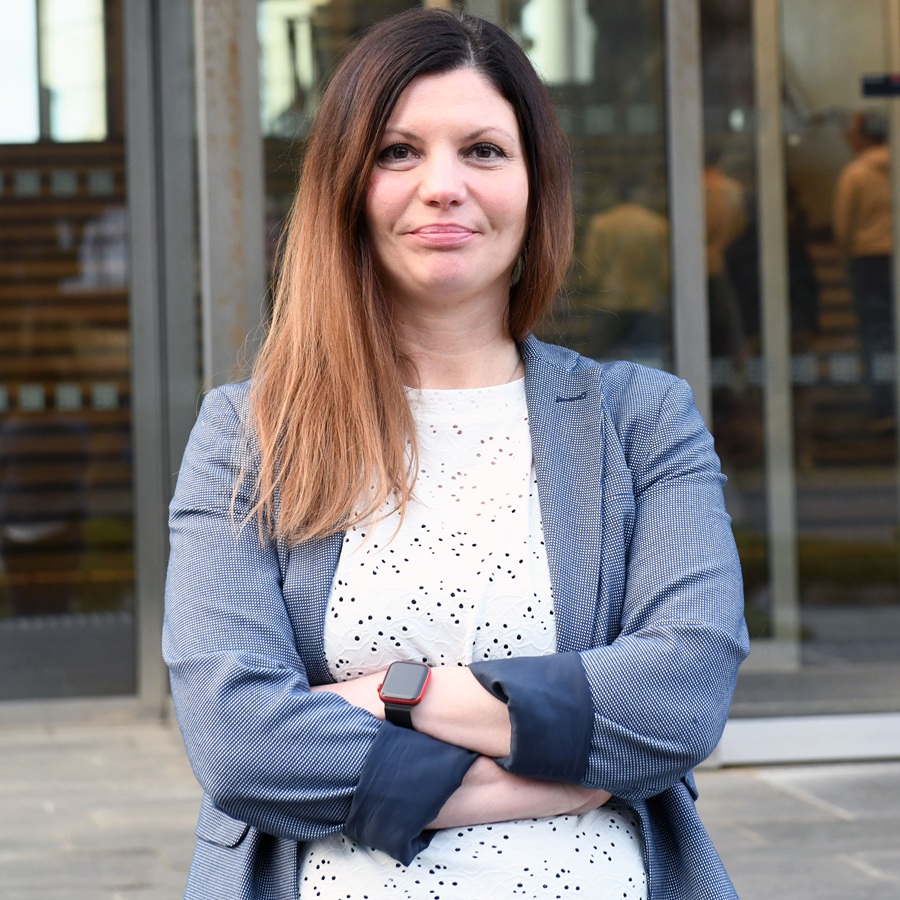
On Tuesday 14 April Anne Marthe Bjønness will hold a trial lecture on a prescribed topic and defend her thesis for the PhD degree at NHH.
Money laundering is the process of making “dirty” money appear “clean”, allowing criminals to spend the proceeds of crime in the legitimate economy without triggering suspicion. To prevent and detect money laundering, regulated entities (e.g., banks, real estate agencies, and auditors) are required to file suspicious activity reports (SARs) regarding their clients to Økokrim. But do regulated entities comply with reporting obligations as intended?
In her doctoral thesis, Anne Marthe Bjønness explores this through three distinct articles.
The first article examines whether SARs filed by real estate agencies in Norway complete, relevant, and of sufficient quality. Analyses including 1,117 property transactions and confidential data from Økokrim show that suspicious property transactions amounting to a total of NOK 433 million were unreported. The study also finds that report quality is generally low, making definitive assessments of relevance inconclusive.

The second article is an experiment of 334 anti-money laundering professionals analyzing to what extent hidden ownership receives sufficient attention relative to other “red flags” of money laundering. Despite recent document leaks and media attention highlighting the challenges of non-transparent ownership, the study finds that identification of ultimate beneficial ownership may not receive sufficient attention from reporters.
The third article analyzes to what extent inspections influence the quantity and quality of SARs filed by real estate agencies. Results show a significant increase in reporting after inspections, while report quality remains unchanged. The study finds no evidence of spillover effects, as inspections do not influence the reporting of uninspected entities either geographically close to or affiliated with inspected ones.
The findings illustrate regulated entities’ dual role as gatekeepers and professional enablers of money laundering and emphasize the need for stronger compliance, better risk prioritization, and more effective enforcement strategies to ensure compliance with anti-money laundering reporting obligations to prevent and detect profit-motivated crime.
"Smaller Obligated Entities as Financial Crime Gatekeepers: Effectiveness, Challenges and Innovative Policy Alternatives"
Aud B, 10:15
«Regulated Entities: Gatekeepers and Professional Enablers of Money Laundering»
Aud B, 12:15
Associate Professor Lars Ivar O. Berge (leader), Department of Accounting, Auditing and Law, NHH
Professor Erik Haugom, University of Inland
Assistant Professor Annika von Baar, School of Law, Vrije Universiteit Amsterdam
Professor Ivar Kolstad (main supervisor), Department of Accounting, Auditing and Law, NHH
Professor Morten Holmboe, The Norwegian Police University College
Professor Tina Søreide, Department of Accounting, Auditing and Law, NHH