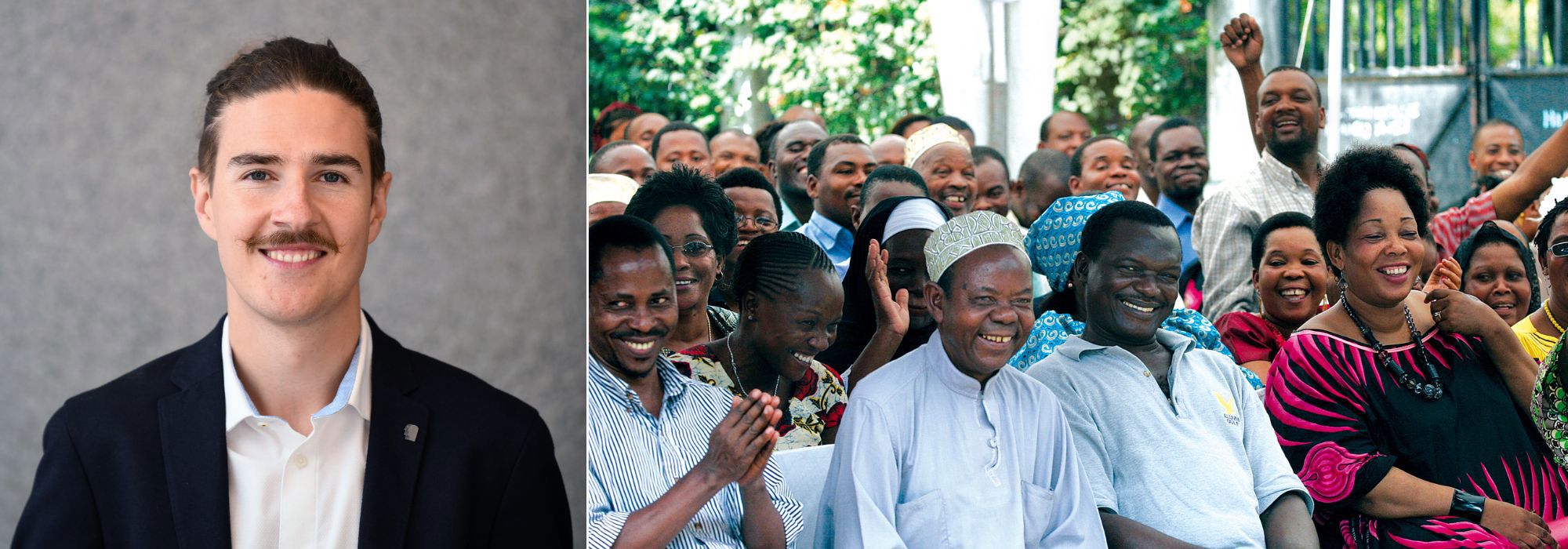
Essays on Overconfidence and Development Economics
On Friday 23 January Adrien Dautheville will hold a trial lecture on a prescribed topic and defend his thesis for the PhD degree at NHH.
This thesis explores the role of aspirations, overconfidence, and misperceptions in shaping the trajectories of young individuals at critical junctures in their lives.
Adrien Dautheville focuses on two populations of Tanzania: secondary school students on the verge of completing their formal education, and young micro-entrepreneurs navigating the informal labor market.
Across the three chapters, he uses a combination of theory, field experiments, and rich survey data to study how expectations influence behavior, and how targeted interventions can help individuals make better decisions.
The first chapter documents that lower secondary students are highly overconfident about passing a crucial national exam. A simple model shows how such overconfidence can reduce effort put into “Plan B” options like vocational programs. A randomized information intervention about school-specific pass rates does not change stated expectations but does make students more likely to apply for vocational or professional education and to discuss backup plans with peers.
The second chapter evaluates a podcast-based “edutainment” program with guided classroom discussions that aims to build hopeful but realistic career plans. The intervention strengthens students’ sense of agency and knowledge of concrete pathways without lowering their aspirations. Treated students perform better on national exams, are more likely to continue in further education, are more likely to be active and self-employed after the exam and earn higher income one year later.
The third chapter study young market traders in Dar es Salaam, who often run their business while searching for a salaried job. Survey and experimental evidence reveal that many overestimate their chances of moving into wage work; active job seekers invest less in their firms and earn lower profits, but information about low transition rates, while it adjusts some beliefs, does not change behavior or investment in the medium run.
Title of the thesis:
Essays on Overconfidence and Development Economics
Supervisors:
Professor Vincent Somville (main supervisor), Department of Economics, NHH
Professor Nadja Dwenger, University of Hohenheim
Prescribed topic for the trial lecture:
"Behavioral barriers to educational attainment in development countries: Theory and evidence"
Trial lecture:
Aud. Karl Borch, 10:15
Defense:
Aud. Karl Borch, 12:15
Members of the evaluation committee:
Professor Ingar Haaland (chair of the committee), Department of Economics, NHH
Professor Patricio Dalton, Tilburg University
Professor Elise Huillery, Dauphine, University Paris-Dauphine
The trial lecture and thesis defense will be open to the public.