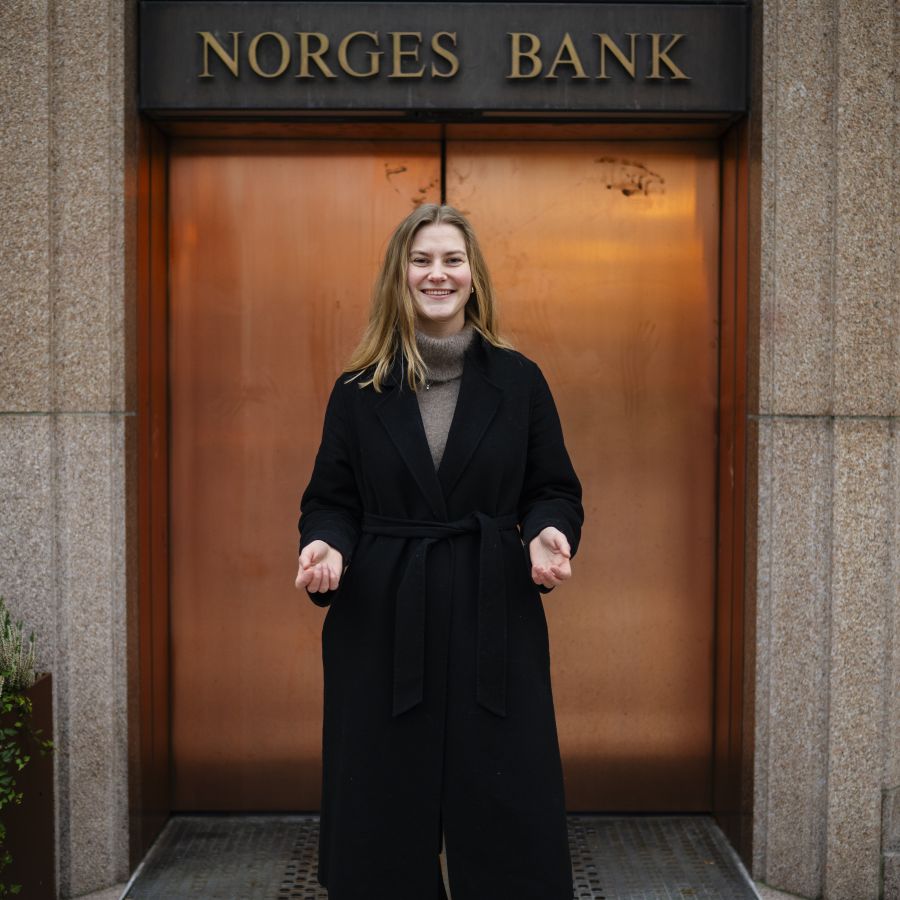
During a typical week, I talk to everyone in the class.
BEDS-student Peder Totland Olsen
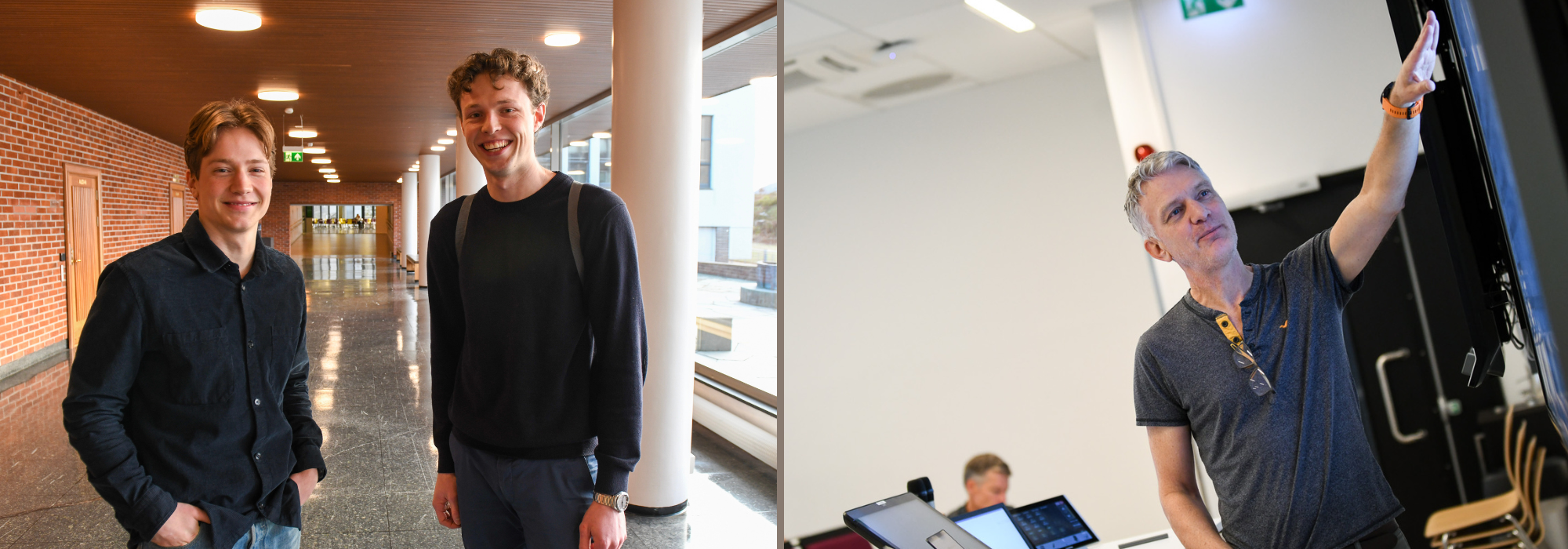
NHH’s English-taught bachelor programme, BEDS, shot straight into the list of studies with the highest admission requirements in Norway. Here’s what it’s all about.
If you're excited about a technical education but still want to learn economics and gain solid business insight — or the other way around — what kind of programme actually fits the bill?
This was exactly the dilemma Einar Storvestre (21) faced a year ago, when he applied to university for the first time. He ended up choosing “the best of both worlds”, turned down NTNU in Trondheim, and instead applied to NHH.
More specifically: the Bachelor in Business, Economics and Data Science, known as BEDS. The programme combines NHH’s traditional economics curriculum with a stronger emphasis on technology, data, and programming. Or, as Storvestre puts it:
«Economics studies for the tech‑savvy!»

BEDS entered the landscape of Norwegian study programmes like a rocket in 2024. With an admission score of 59.2 for applicants with a first-time diploma last year, the programme shot straight into the top five most competitive studies to get into. Storvestre is delighted.
«High entry requirements mean skilled and ambitious fellow students you can learn from. At the same time, the class environment is really good,» says the Bergen native. He says «class» because BEDS currently has only 50–60 students in its first cohort. That makes the group tightly knit — everyone knows everyone, and everyone is seen, he says.
«The lectures are also more interactive. In that sense, the study environment feels more like upper secondary school. That suits me well,» says his fellow student, Peter Totland Olsen.
BEDS is an English‑taught programme, and the two study alongside classmates from Dubai and Kuwait to Portugal and Germany. Totland Olsen admits he was nervous before starting.
«I’ve never been great with languages, so I worried about managing in English. But it’s easier than I expected. Most of us are on roughly the same level,» he says.
During a typical week, I talk to everyone in the class.
BEDS-student Peder Totland Olsen
Programme Director for BEDS, Jørgen Haug, agrees.
«We have a very exciting group of students,» he concludes.
Haug emphasises that BEDS, like NHH’s traditional Business and Economics programme, is an education in economics and business administration.
«But we allocate substantial space to training students to understand and use digital solutions.»
What does that actually mean?
«For example, collecting and processing unstructured data, such as data from social media. It also includes using AI for innovation and efficiency, as well as developing digital solutions.»
You might be the ones automating parts of the accounting process.
Jørgen Haug
Who is the programme actually suited for? Haug highlights several points:
«But being good at maths certainly helps,» Haug says.
«What kind of jobs can you actually get after completing a BEDS degree?»
«You’ll be able to work for the same types of employers as other economics graduates,» Haug points out.
«But often in more technical and analytical roles.»
Examples:
«For instance, in quantitative analysis within marketing, investment and risk management in banking and finance, or in logistics. Instead of doing the accounting yourselves, you might be the ones automating parts of the accounting process.»
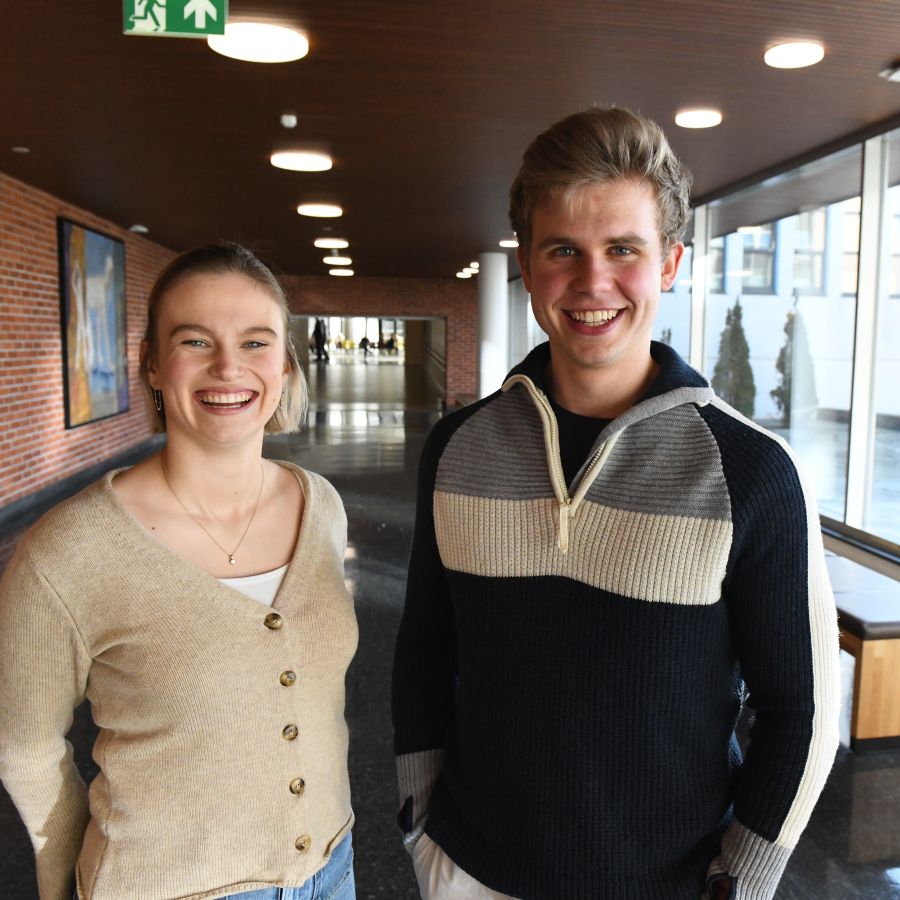
Einar Storvestre and Peder Totland Olsen have not carved out a clear career path yet. But they do know what it takes along the way: hard work in a high‑performing environment.
«If you’re used to being the top of your class in upper secondary school, you most likely won’t be that here. But BEDS is incredibly useful and future‑oriented,» Storvestre says.
Both nevertheless highlight the strong social and academic environment as the programme’s greatest strength.
«During a typical week, I talk to everyone in the class. Not only in academic discussions, but socially as well,» Totland Olsen says. In short:
«I’m having an insanely good time at school.»