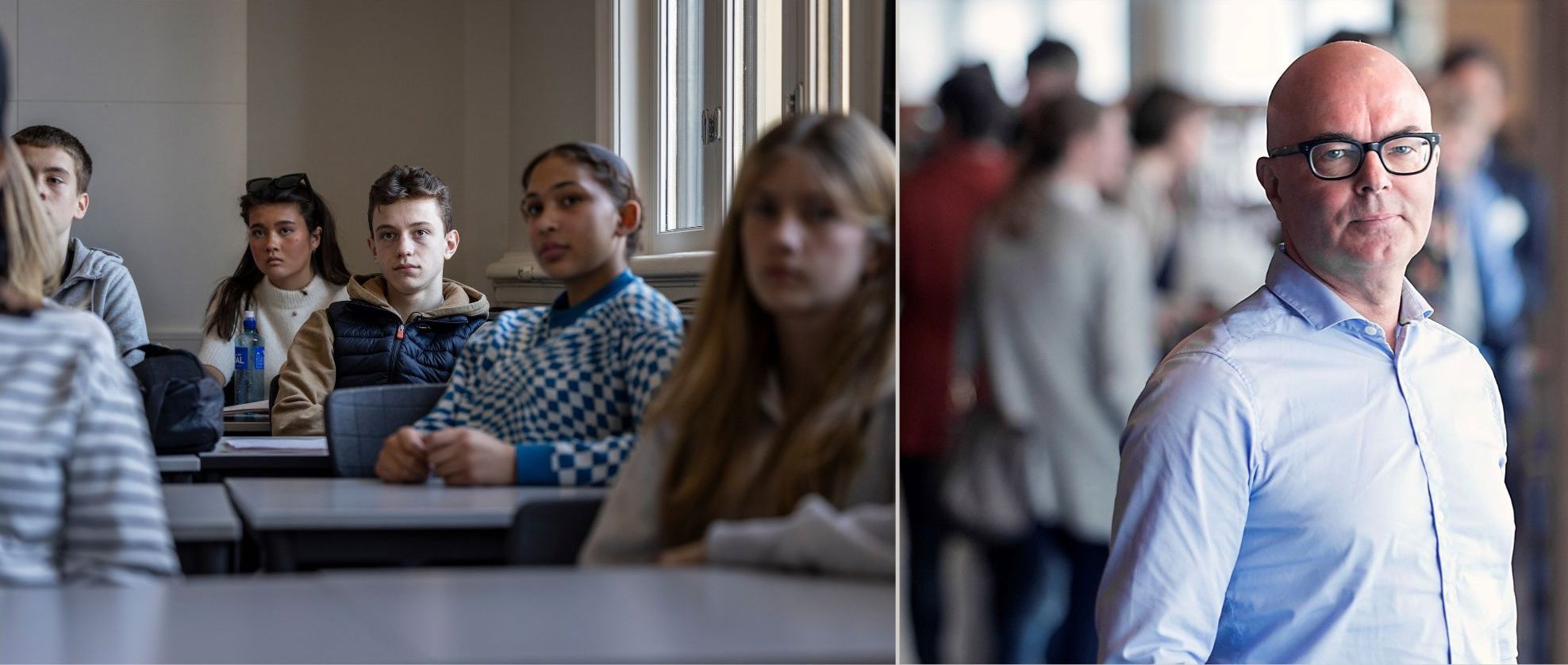
Students from elite families lift others with them
In some families, it’s almost expected: You’re going to be a doctor, a lawyer, or an NHH economist. For these young people, top-tier studies are a given. And it rubs off.
In the TV 2 series Skolebytte (“School Swap”), students from Oslo’s east and west trade schools to learn more about each other – and about themselves. A new study from NHH shows that such encounters may have deeper consequences than many realise.
`Access to an inside network is extremely important,´ says NHH Professor Kjell Gunnar Salvanes, Department of Economics and Norwegian Centre of Excellence FAIR.
These findings are presented in First Generation Elite: The Role of School Networks (see fact box), soon to be published in the American Economic Review, one of the world’s leading journals in economics.
More students choose selective programmes
Using an exceptionally rich Norwegian dataset, the researchers reach a clear conclusion:
When teenagers from highly educated homes – doctors, lawyers, and economists – attend school alongside peers from less-educated families, something happens. They influence their classmates. Grades improve – and more students apply to study programmes with high entry requirements.
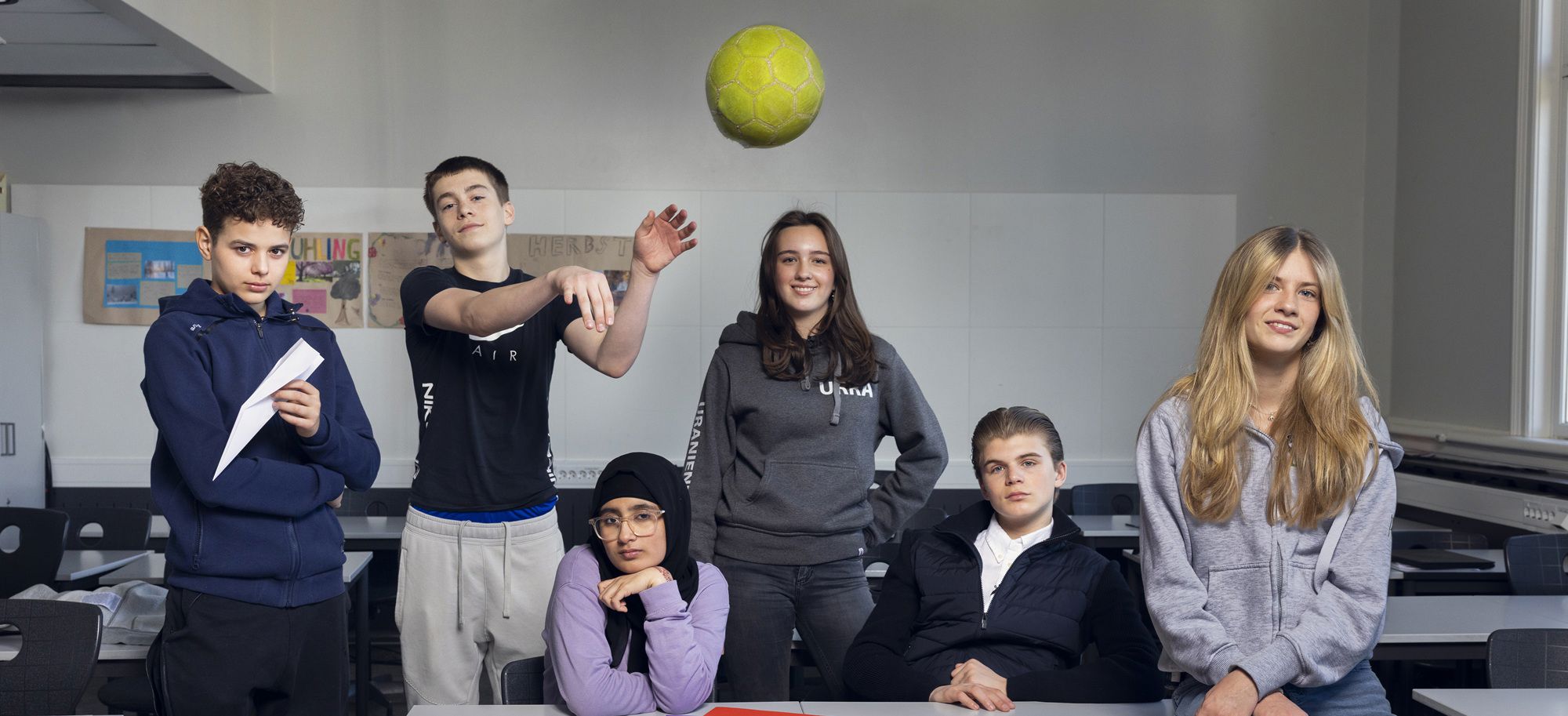
`We see that the peer effect is strong. Such interactions among students can create new ambitions,´ says Salvanes.
Sharp divides today
Today, there are large differences between upper secondary schools, especially in the big cities. Students from highly educated families tend to cluster at the same schools, while those from lower socio-economic backgrounds attend others.
Elite Education
In the Norwegian context, elite education typically refers to fields such as medicine, law, economics (at NHH), and certain IT and engineering programmes.
- Admit only three to four percent of each age cohort
- Have significantly higher admission requirements than other study programmes
- Are closely linked to top positions and high income
`In this way, inequalities are reproduced across generations´.
The researchers wanted to answer two questions:
What is the likelihood of choosing a demanding field of study if you attend school with children of doctors, lawyers, and economists? And how do these effects differ across student groups?
The study draws on Norwegian registry data for nearly 180,000 students who started upper secondary school between 2002 and 2010. By linking student records with information about parents’ education, occupation, and income, the researchers could identify students whose parents had prestigious degrees and high-status professions.
In American Economic Review
First Generation Elite: The Role of School Networks:
Sarah Cattan, Kjell G. Salvanes and Emma Tominey
The study examines how students from families with elite educational backgrounds influence their peers’ educational choices. To identify this effect, the researchers exploit natural variation in the composition of students across cohorts within the same school, where the share of students from elite families changes randomly from year to year. This method provides a solid foundation for drawing causal conclusions about peer effects.
Clear results
`Students with highly educated parents influence all kinds of classmates. Having such peers increases the likelihood of doing better at school – and of applying for programmes that are hard to get into. We can see this clearly in the exam results, which are independent of teacher assessments,´ says the NHH Professor.
All students were affected by these peers – not only those from families with little or no higher education.
In other words, the networks students build during upper secondary school, regardless of prior performance, shape their educational choices and later success in the labour market.
Two key mechanisms
According to Salvanes and his co-authors, two main mechanisms are at play.
The first concerns academic standards – study habits, attendance, and discipline – that spread among classmates.
The second, and even more important, concerns social networks.
`They influence classmates’ ambitions. More students gain insight into educational pathways and career opportunities – and dare to aim for the most competitive study programmes, says Salvanes.
Conversations at home
Students from elite families bring with them both knowledge and ambition.
`They visit each other’s homes, where parents with higher education talk about which degrees open doors and what it takes to get in,´ explains Salvanes.
According to the researchers, this is one way segregation can be broken down. When students from different backgrounds meet, more of them gain access to information, role models, and networks – long before they must decide what to study.
Possible measures
Given today’s admission system, is there any hope of creating more mixed student groups in upper secondary schools?”
`One option could be a hybrid system, where a certain share of admissions is based on proximity to the school,´says Salvanes.
He is more skeptical about whether targeted counselling alone can make a major difference.
`Lack of information probably plays a role, but it’s unclear whether increased guidance can outweigh the strong network effects. The key is to create opportunities for direct interaction between different student groups,´ says Salvanes.