This project is really interesting because it shows how small everyday social decisions can be rooted in systematic misperceptions about others
Esra Aslan
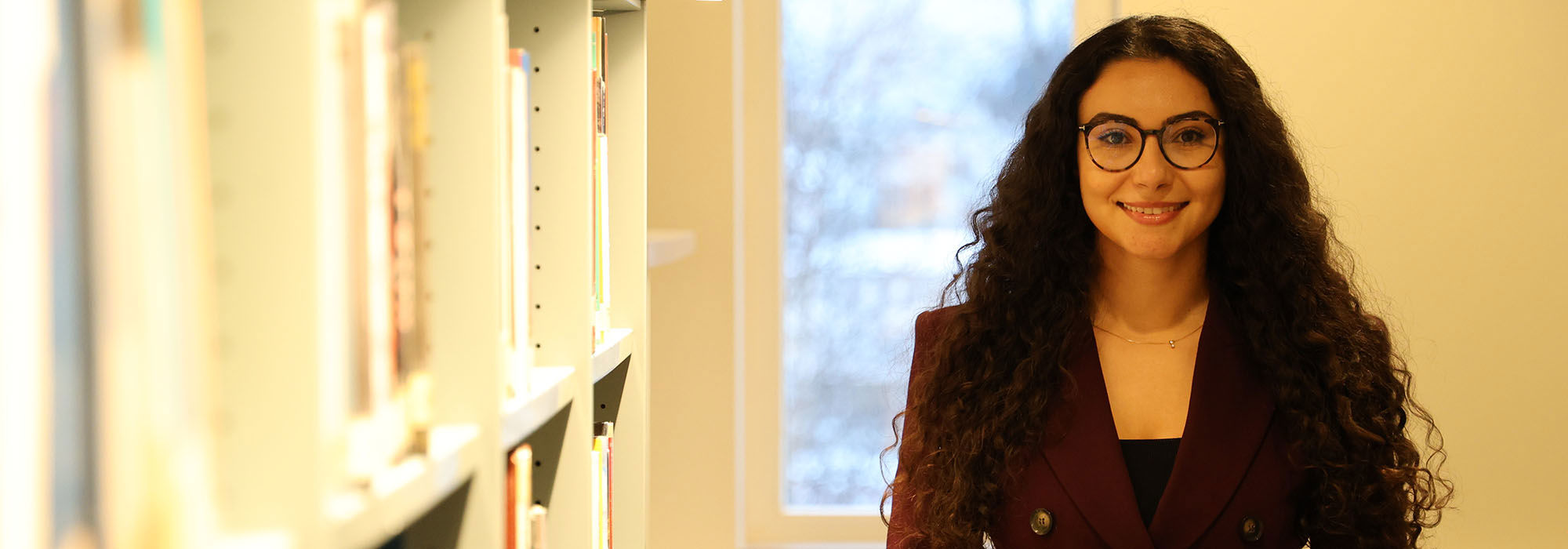
For PhD Research Scholar Esra Aslan, everyday decisions are often shaped by assumptions people do not even realize they have.
“I have always been fascinated by why people behave the way they do and how often our judgments about others can be inaccurate,” says PhD research scholar Esra Aslan.
Aslan’s academic path at NHH started with her master’s degree and work as a research assistant, before she embarked on her doctoral studies. Alongside her research, she has also been actively involved in NHH governance as a PhD representative on the NHH Board and Research Committee, as well as a welfare representative at NHHdoc.
Aslan's research interests revolve around behavioral decision-making, beliefs, misperceptions, and nudges. In other words, she studies how people think, decide, and interact in social, consumer, and organizational contexts. One of her current research projects examines social misperceptions in consumer contexts.
“In this work, we study what happens when people cancel social consumption experiences, such as dining out or attending events with others.”
This project is really interesting because it shows how small everyday social decisions can be rooted in systematic misperceptions about others
Esra Aslan
The researchers found that cancelers underestimate how acceptable others find being canceled on. As a result, they also overestimate how much compensation others expect, for example in the form of gifts or favors. For Aslan, this project reflects what she finds most fascinating about behavioral research.
“This project is really interesting because it shows how small everyday social decisions can be rooted in systematic misperceptions about others,” she explains.
This also connects to the research scholar's underlying motivation. As Aslan demonstrates, many everyday decisions, whether in social life, consumer behavior, or organizations, are shaped not only by objective reality, but by people’s assumptions about others.
“What I found fascinating is that these assumptions are often inaccurate, but still can influence how people behave. I believe that if we better understand and correct some of these misperceptions, we could improve social relationships, create healthier organizations, and ultimately contribute to greater well-being overall.”
I think what makes DIG special is that it brings together people who work on different but very relevant research questions, often connected to real organizational and societal challenges.
Esra Aslan
As Aslan approaches the end of her PhD journey and looks ahead to continuing to do high-quality research, she also feels appreciative about her time at DIG. Her years at the research centre have brought both challenge and community.
“My time at DIG has been very valuable. I think what makes DIG special is that it brings together people who work on different but very relevant research questions, often connected to real organizational and societal challenges. As a PhD student, I find that very inspiring.”
She also highlights the value of exchanging ideas with researchers who work on different research questions. According to Aslan, these conversations have helped her view her own work from new perspectives and think more broadly about her research. She also emphasizes the strong support DIG provides to its PhD fellows.
“Overall, I would say it has been a very positive experience, and I would definitely recommend DIG to future PhD students,” Aslan concludes.