DIG Summit 2026: Digital sovereignty – demanding new answers
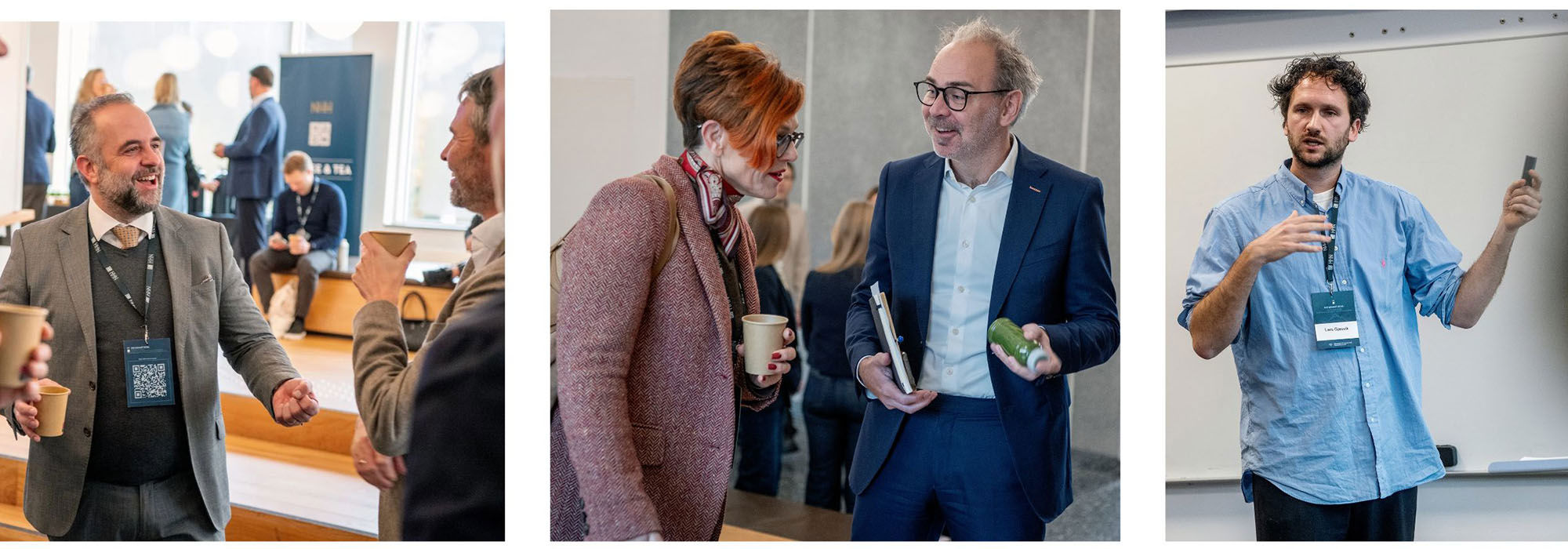
From the DIG Summit 2026 we see head of DIG, Bram Timmermans greeting participants, Rector Helge Thorbjørnsen in conversation with Bente Groven-Syversen of the Norwegian Tax Administration and Senior Research Fellow of Nupi, Lars Gjesvik givng his keynote adress. All photos: Helge Skodvin
DIG Summit 2026: Digital sovereignty – demanding new answers
In 1936, when NHH opened, the main challenges were caused by technological breakthroughs in a geopolitically unstable world. The picture is much the same 90 years on.
This was the opening message as Rector of NHH, Helge Thorbjørnsen, welcomed the participants to the DIG Summit 2026. The need to understand the impact and implications of new technology in an unstable world is still a natural subject for NHH and a DIG Summit he concluded in his opening remarks of the event.
From the sidelines to critical infrastructure
Senior research fellow at the Norwegian Institute of International Affairs (NUPI) gave a keynote speech at the DIG Summit, where he observed and remarked on some of the most important features of the technological changes we see.
The digital platforms we use for communication and control of documents and administration across nearly all businesses and organizations have developed from something of a “niche product” to absolutely critical infrastructure. When they are used to control the temperature in fridges and freezers in food stores, they are a key component in food supplies.
The second development is that the platform has become the key product of these companies, rather than software applications.
─ Threatening with immediate denial of access to these platforms becomes a very potent political tool, Gjesvik pointed out.
When the software applications are also proprietary to each platform, then people and organizations are locked in with the provider of the platform, Gjesvik pointed out.
In the age of AI, there is also a new dependency developing, according to research fellow Lars Gjesvik.
─ The new thing is cognitive dependency, or the fear of losing the results and mutual understanding develop through years of cooperation with Claude, he said.
─ We saw how many depends on us
During the panel discussion, or the fire-side chat as the preferred DIG Summit format, Dagfinn Myhre, VP of Telenor Research, made the observation that during a period of technical problems with some of their core services in early October this year, two key dependencies became clear.
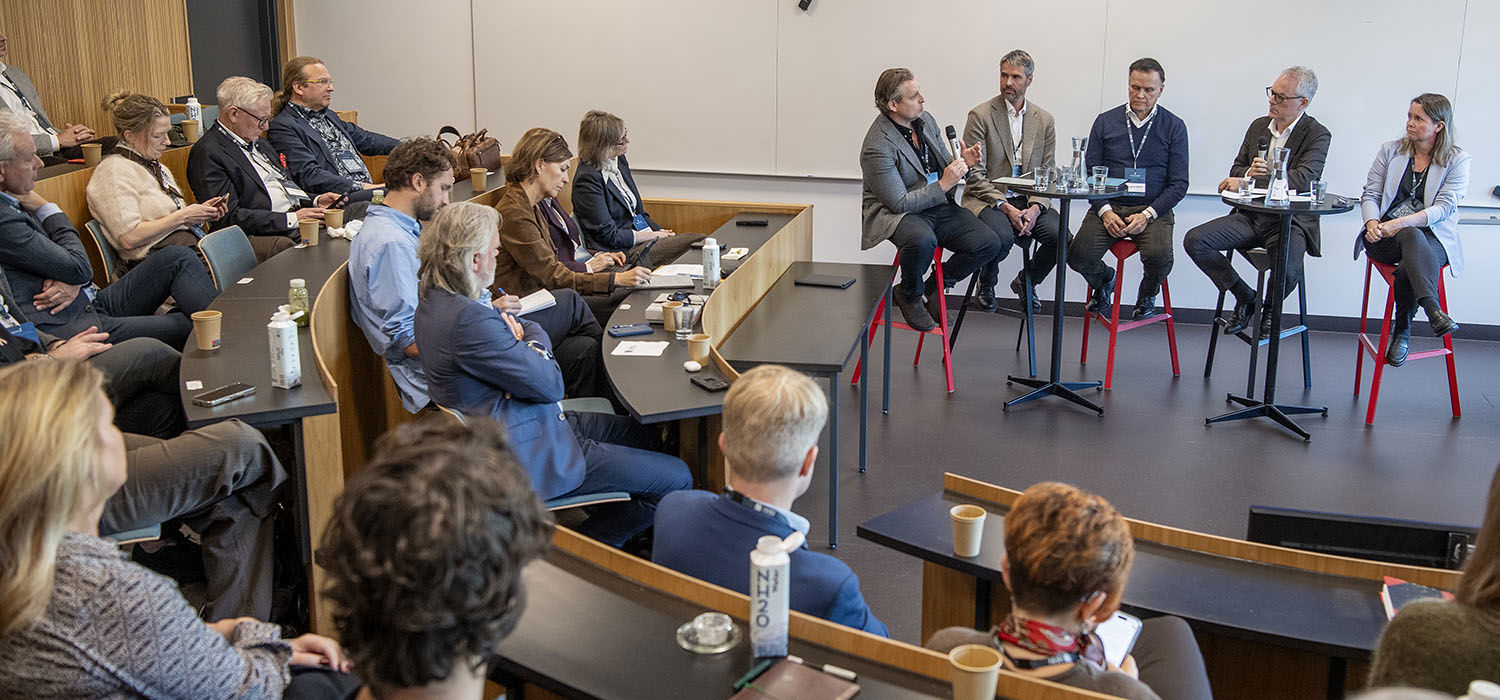
From the fireside chat. In the panel we see from left, Christian Askvik-Hansen of Prelect, Johan Rostoft of Gjensidige, Dagfinn Myhre of Telenor, moderator Øystein Søreide of Abelia and Bente Hoff of KPMG. Photo: Helge Skodvin
─ We noticed how many who are dependent on us. Even all the trains in Norway halted. We also saw that we are critically dependent on American, leading technology, he said.
In the ensuing debate over the core issues on digital sovereignty some conclusions became clear.
For a small and open economy like Norway, it is unrealistic to work for complete digital independence where we are completely self-sufficient. It is thus necessary to have a deep understanding of where the systemic risks are in any organization and take steps to secure against these risks.
Regulations and “portability”
The road towards digital sovereignty and securing the critical, core services in a modern economy can be achieved through sufficient and smart regulations. Introducing “number portability” (i.e. that you keep your phone number when changing suppler) made a huge impact on the competition in the industry.
The lesson is that you need to regulate for more openness on how solutions and applications work, making movement across platforms possible, or “portability”. Regulations should thus aim to achieve more standardized solutions, without paving the way for monopolies by being too strict.
Christian Askvik-Hansen is CEO of Prelect, a subsidiary of regional power company Eviny, set up to deliver AI-based solutions for smart running of electrical equipment.
He pointed out in the debate that we need regulations and business conditions that encourage testing new solutions in smaller organizations.
─ Major breakthroughs rarely comes from large organizations. They require consensus, and you will never have that in large groups. With money and energy available to test new solutions in small scale organizations, we could take big steps forward, he concluded.
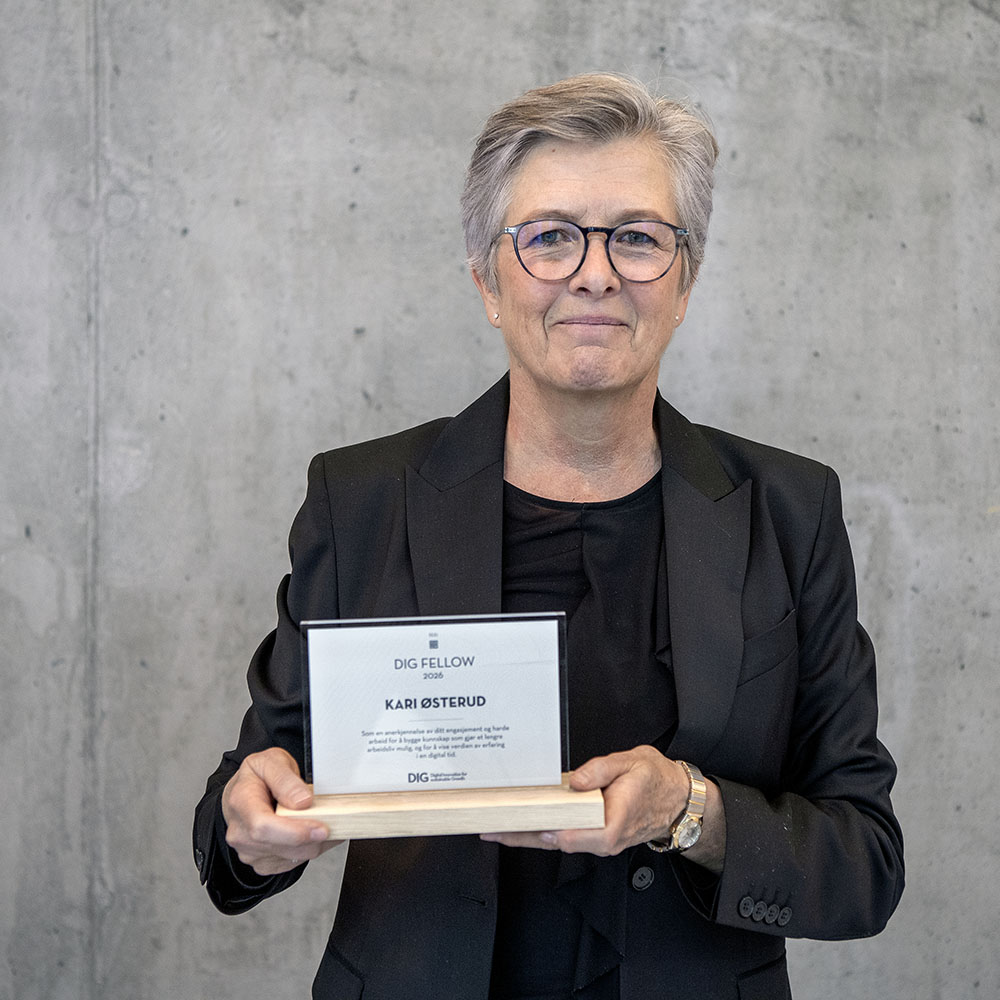
Head of the Centre for Extended Working Life, Kari Østerud, has been appointed as the newest DIG Fellow. Being appointed DIG Fellow requires the recipient to have made a substantial and lasting impact in areas related to DIG’s research agenda.