
Digital sovereignty – demanding new answers
In 1936, when NHH opened, the main challenges were caused by technological breakthroughs in a geopolitically unstable world. The picture is much the same 90 years on.
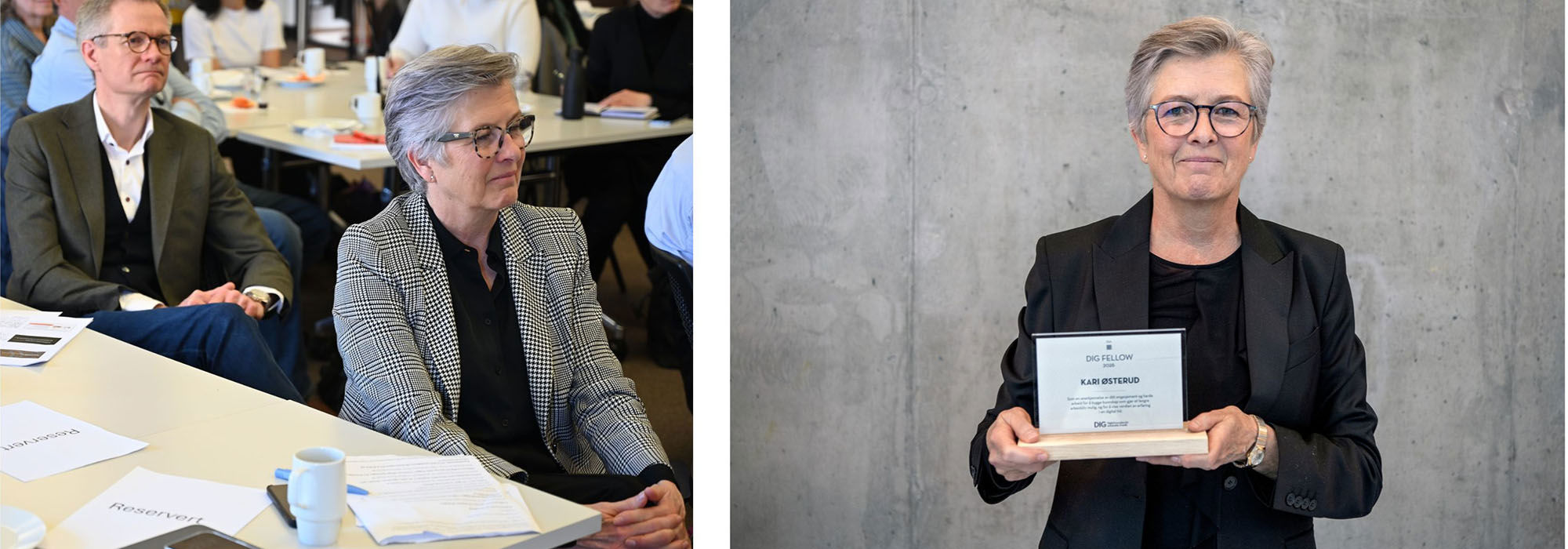
Head of the Centre for Extended Working Life, Kari Østerud, has been appointed as the newest DIG Fellow. Being appointed DIG Fellow requires the recipient to have made a substantial and lasting impact in areas related to DIG’s research agenda.
When leader of DIG, Professor Bram Timmermans of NHH, announced this year’s DIG Fellow he said that Østerud had been an important force in moving forward DIG’s research in the “Silver Economy”.
─ In your capacity as CEO of the Centre, you have played a key role in shaping DIG’s research in this field, alongside our professors Inger Stensaker and Therese Egeland. How can more people stay in the workforce for longer? How can organizations utilize the expertise and experience in implementing major changes? What actions can be taken to turn an ageing population into a source for innovation and value creation, Timmermans said as he announced the appointment of Østerud as DIG Fellow during the annual DIG Summit at NHH in Bergen.
When Østerud accepted the prize, she pointed that the knowledge centre for obvious reasons is following the “Silver Economy”- research activities at DIG very closely.
- We have worked closely with many of the people here to achieve this, she said.
She added that having listened to the challenges discussed at the DIG Summit, the most important factor needed to succeed in achieving greater digital sovereignty and independence would be the people needed to do the job.
─ And those needed to do the job are those already hired, she added.
Kari Østerud also called for greater innovation and research into work practices.
─ The majority retire from work at the age of 65. This is problematic, and we need to change this, she added.
Østerud said the Centre for Extended Working Life looks forward to continue the partnership with DIG in their efforts to innovate working practices in light of the changing demographics.
