Single women were already working. The transformative change was the massive entry of married women into paid employment.
Jonna Olsson
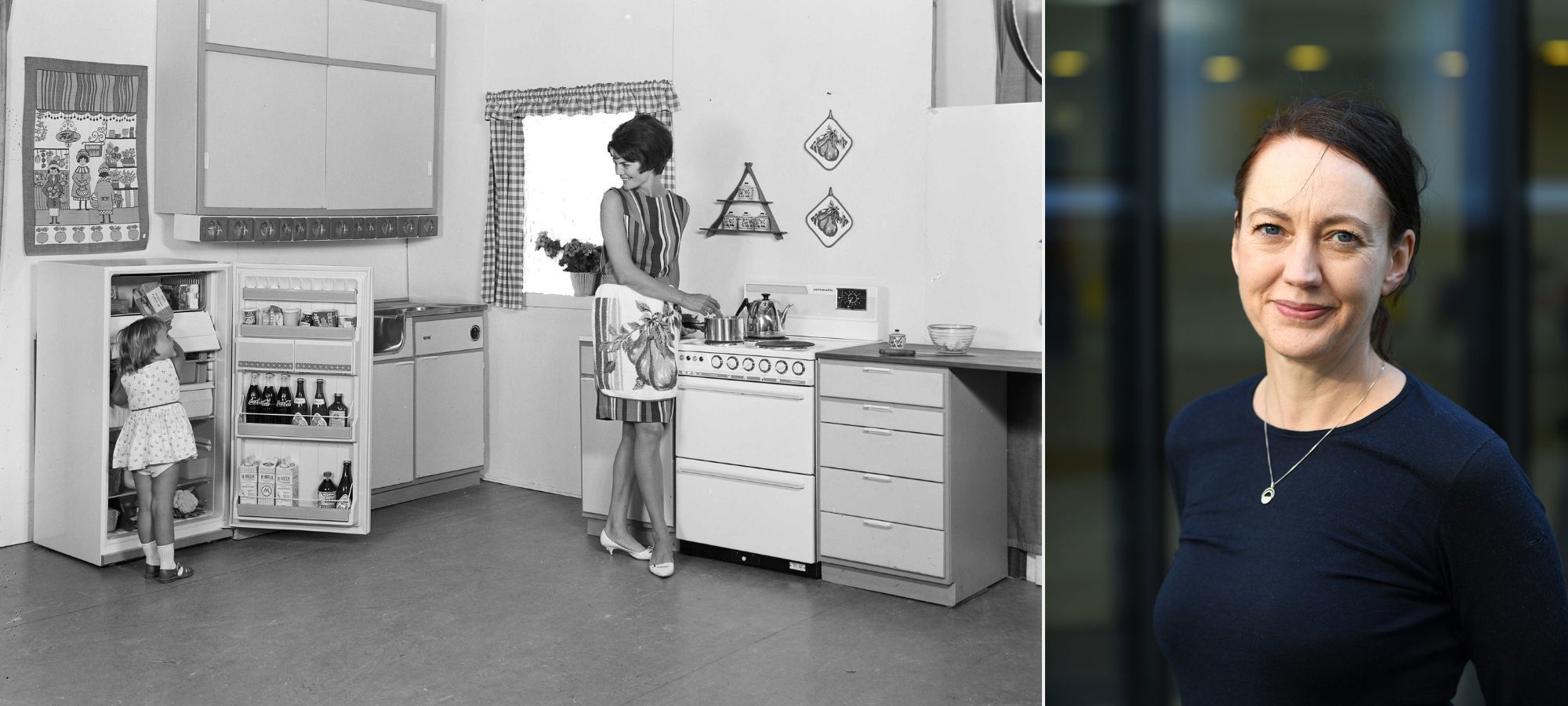
They did not just change the labour market. They have also changed how the economy recovers from crises, new research by Jonna Olsson shows.

A study by Associate Professor Jonna Olsson demonstrates that the rapid growth in married women’s employment played a key role in the fast job recovery after economic crises before 1990. When that growth later stalled, economic recovery became slower.
`Women have been an important engine of economic stability, ´ Jonna Olsson says.
`And when that engine stopped growing, it had consequences for the entire economy´.
The findings are based on Olsson´s paper Singles, Couples, and Their Labor Supply: Long-Run Trends and Short-Run Fluctuations, published in the journal American Economic Journal: Macroeconomics.
For decades, research has described the rising female employment as one of the most important labour market transformations of the twentieth century. But Olsson’s research highlights a crucial distinction.
Single women were already working. The transformative change was the massive entry of married women into paid employment.
Jonna Olsson
`It was not that women suddenly entered the labour market, ´ she explains.
`Single women were already working. The transformative change was the massive entry of married women into paid employment. ´
Singles, Couples, and Their Labor Supply: Long-Run Trends and Short-Run Fluctuations. In American Economic Journal: Macroeconomics (2025). Jonna Olsson is the sole author of the paper, published in American Economic Journal: Macroeconomics. The publication qualifies NHH’s research bonus scheme, reflecting the journal’s exceptionally high standing. Single-authored articles at this level are rare.
Between the early 1960s and the mid-1990s, employment among married women rose by around thirty percentage points. Over the same period, employment among single women remained unchanged.
Importantly, this shift did not come at the expense of men.
`Married men were not crowded out of the labour market by their spouses. This was not a zero-sum game. ´
The rise of married women into paid work created the modern dual-earner household, fundamentally changing how families manage risk.
`With two potential earners, households became better insured against income shocks, ´ Olsson explains.
`That changed labour supply behaviour and made employment more resilient during downturns. ´
That changed labour supply behaviour and made employment more resilient during downturns.
Jonna Olsson
By incorporating gender and household composition into a macroeconomic model, the research shows how these changes affected the broader economy. The strong underlying growth in married women’s employment helped employment rebound quickly after recessions before 1990.
When that growth slowed in later decades, recoveries also became slower.
The findings challenge how public debate often treats “women in the workforce” as a one group.
`This is not just a gender equality story. It is a story about household composition, insurance within families, and macroeconomic dynamics, ´ Olsson says.
Understanding these mechanisms matters today, as many economies struggle with slower growth, demographic ageing, and concerns about so-called jobless recoveries.
`If we want to understand why the economy behaved differently in the past, and how to future-proof labour markets going forward, we need to take households seriously, not just gender alone, ´Olsson says.
While “trad wife” ideals may be visible in social media, there is little evidence so far that they are widespread enough to affect aggregate labour supply or macroeconomic dynamics.
Jonna Olsson
`As debates about so-called trad wife ideals and a return to single-earner family models resurface in media and on social platforms, is there anything in your research that speaks to that discussion from a macroeconomic perspective? ´
`From a macroeconomic perspective, I would be cautious about overstating the importance of this trend. While “trad wife” ideals may be visible in social media, there is little evidence so far that they are widespread enough to affect aggregate labour supply or macroeconomic dynamics. At the individual level, however, the lesson is clear: having your own income provides freedom, resilience, and independence—both in the short run and over the life cycle. ´