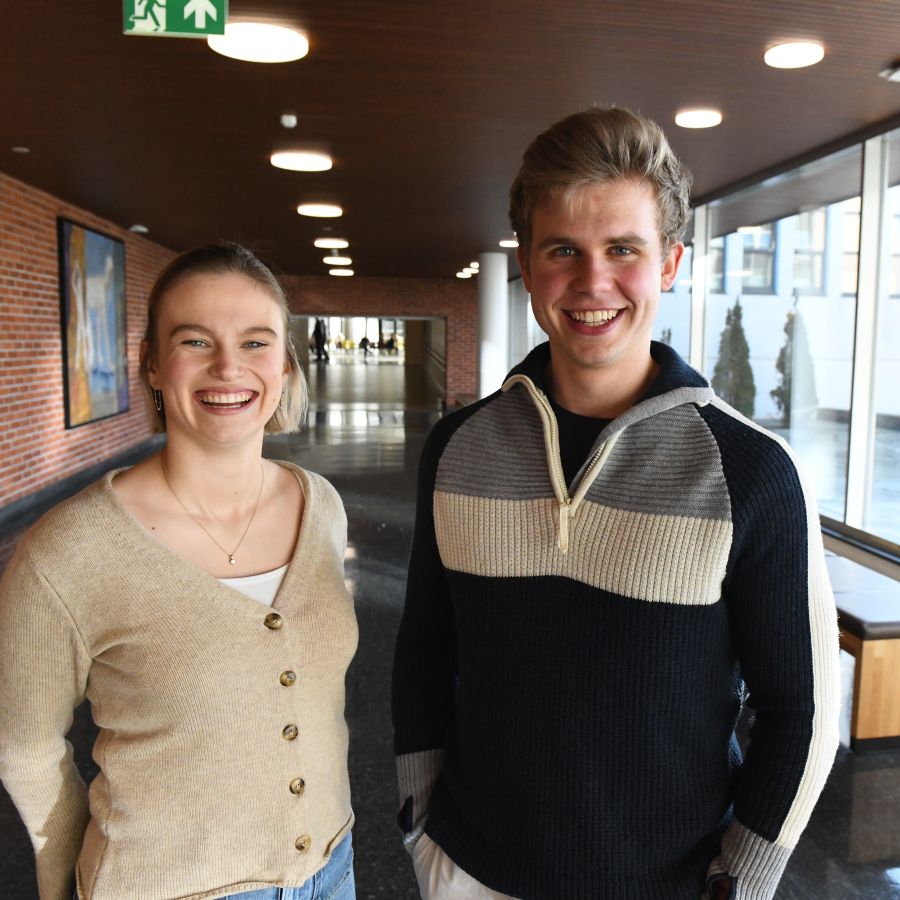
Among Norway’s most satisfied students: «We’ve got each other’s backs!»
Students who support one another. Close contact with the business community. That is why NHH scores highly on student satisfaction, according to a national Norwegian survey.

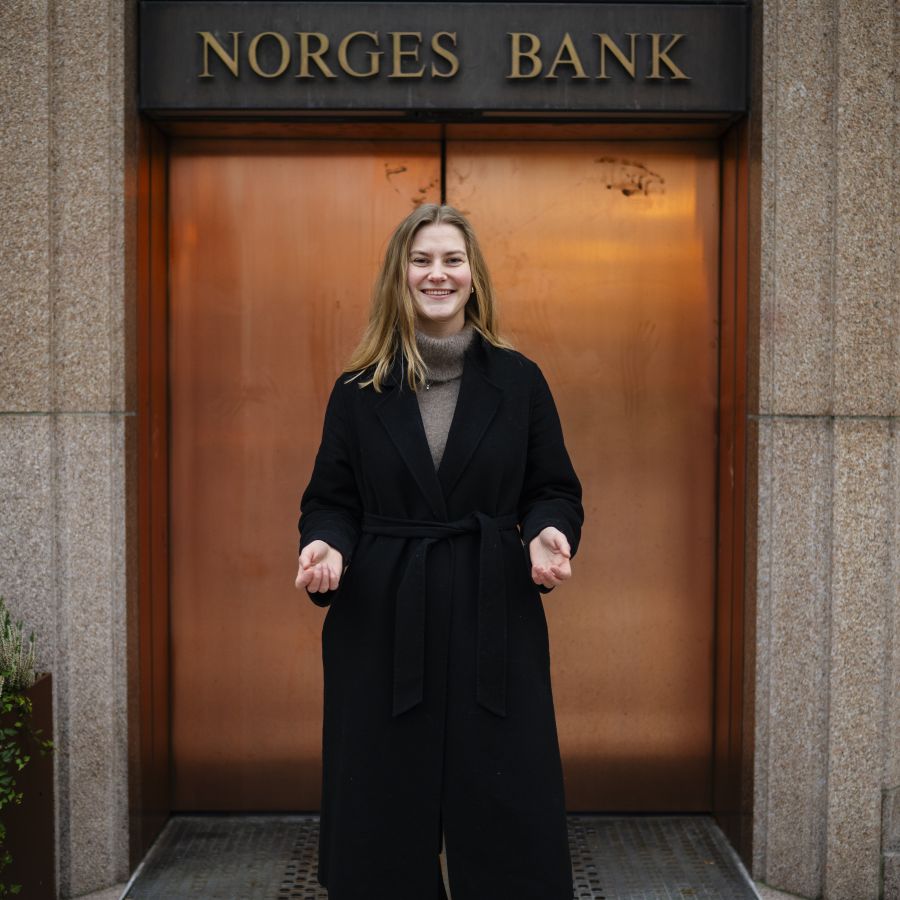
Today, the 24-year-old analyses investments at HitecVision, one of Norway’s biggest private equity firms. New figures show most NHH graduates are in work within six months.
When Norway shut down in March 2020, the stock market fell fast. Lena Hamre, then 19, bought her first shares while prices were low. A few months later she started at NHH, and the market climbed again.
'I got to be part of that upswing. It only made me more interested in economics,' says Hamre.
Early on she joined the student stock club Femme Forvaltning. She stayed for five years and ended up as portfolio manager. She also chose a finance track in her master’s profile.
A year before her final exam, she secured a permanent job as an analyst at HitecVision in Stavanger. She started in August 2025.
According to NHH’s job market survey, her story is far from unique.

After a little more than half a year in the industry, she’s thriving. HitecVision used to focus heavily on oil and gas, but now invests exclusively in renewable energy.
'We set up funds, bring in investors, and use capital and expertise to grow the value of the companies we buy. After five to ten years, we sell them or take them public,' she says.
Right now she is working on a small hydropower company and looking at new plants. 'I joined while the renewables push is still in its early days. It’s incredibly exciting to be part of,' she says.
The survey was conducted among graduates from spring 2025. NHH graduates are also seeing pay growth. For the first time, the average salary is above NOK 700,000 (707,888), up 3.2 percent from the year before.
Hamre says she enjoys the work itself most. She spends a lot of time in Excel, building analyses used in investment decisions.
'It’s exciting to help shape companies. I get a lot of responsibility, but also good support. My work is always reviewed, and that gives confidence in what we deliver,' she says.
She feels her studies prepared her well. 'NHH gave me a strong theoretical base. Femme Forvaltning gave me hands-on experience. Together, that made me feel ready,' she says.
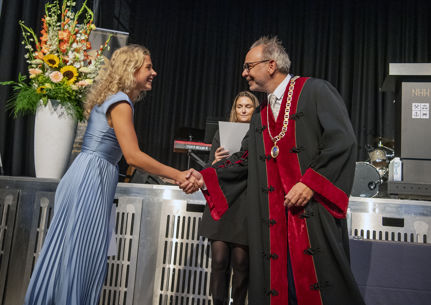
Vice Rector for Education Steffen Juranek says the figures show strong demand. 'That so many secure a job before their final exam shows real confidence in NHH graduates. Lena’s story is a good example,' he says.
There have recently been media stories about a tighter job market in some industries. But Rector Helge Thorbjørnsen says an NHH education is still a safe bet in a changing world.
'It’s true that AI makes some classic entry-level jobs more efficient, like accounting, auditing, consulting and finance. But that doesn’t mean fewer opportunities for NHH graduates. Actually, it's quite the opposite,' he says. Thorbjørnsen points to how NHH is integrating technology and AI more strongly alongside the core business subjects.
'The mix of solid economics, tech know-how and strong people skills will be even more in demand. And our education opens doors in many more industries than where graduates traditionally started. That’s why I’m optimistic,' he says.
Across from the Oslo Stock Exchange, a newly graduated business student is sitting there having the biggest win of his life.
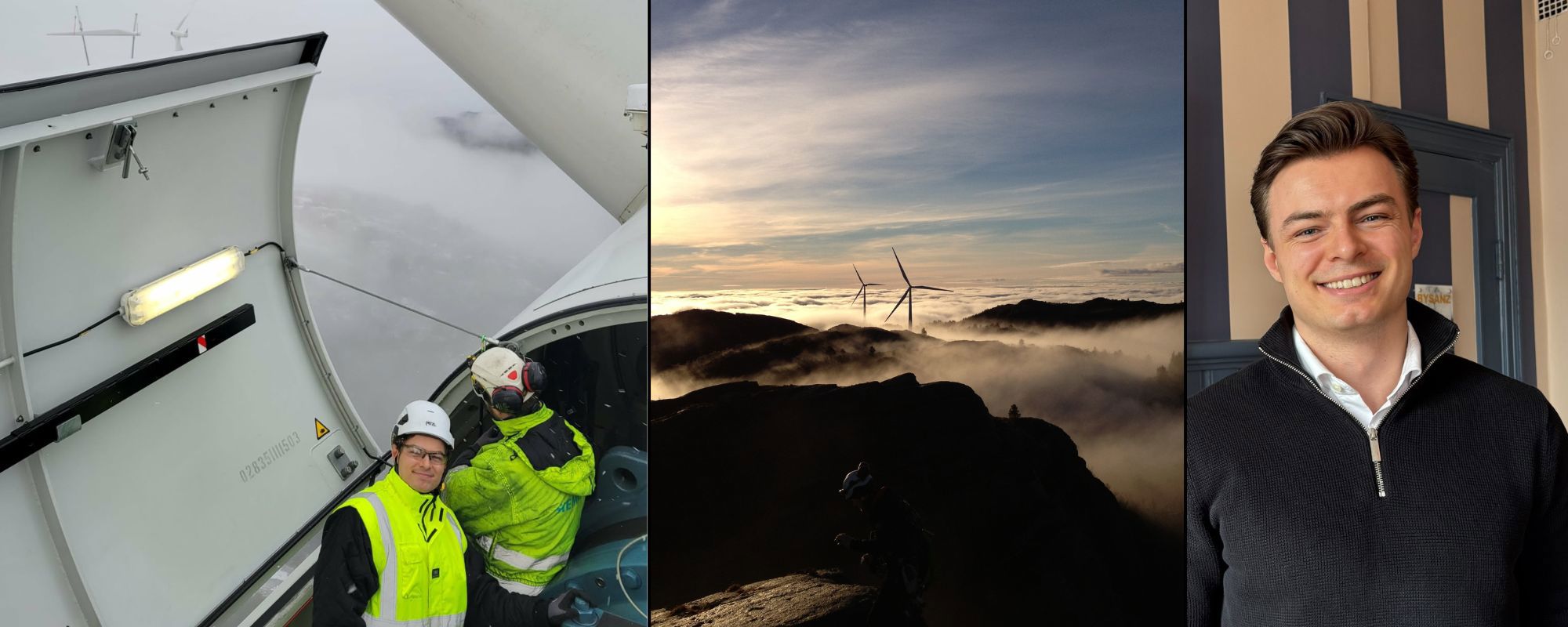
'Challenging. Sometimes overwhelming. But above all, very, very fun,' says Patrick Nicolaisen about moving from studies to work. Few things beat the view from a wind turbine 80 metres above the ground.
Most days, he works behind a screen. As a data engineer in operations at Fred. Olsen Renewables, he has been given big responsibility in a company investing heavily in wind power. He’s also been named an 'AI Champion' in the rollout of AI solutions.
'It’s exciting to work in an international industry that affects everyone. Electricity, transport—energy connects everything,' he says.
Nicolaisen knows he has chosen a less common path. The survey shows only 2 percent went into energy outside oil. Most still go into consulting (36 percent) and auditing (21 percent).
His advice to students is simple: 'Challenge yourself, spend time with different people, and try new things. Even if everyone says they want finance or consulting, make up your own mind. If you don’t, you’re doing yourself a disservice,' he says.