
Turning Silver into Gold
The Norwegian society is in the midst of a demographic shift, accentuating the need for knowledge on how to extend careers and create new business opportunities.
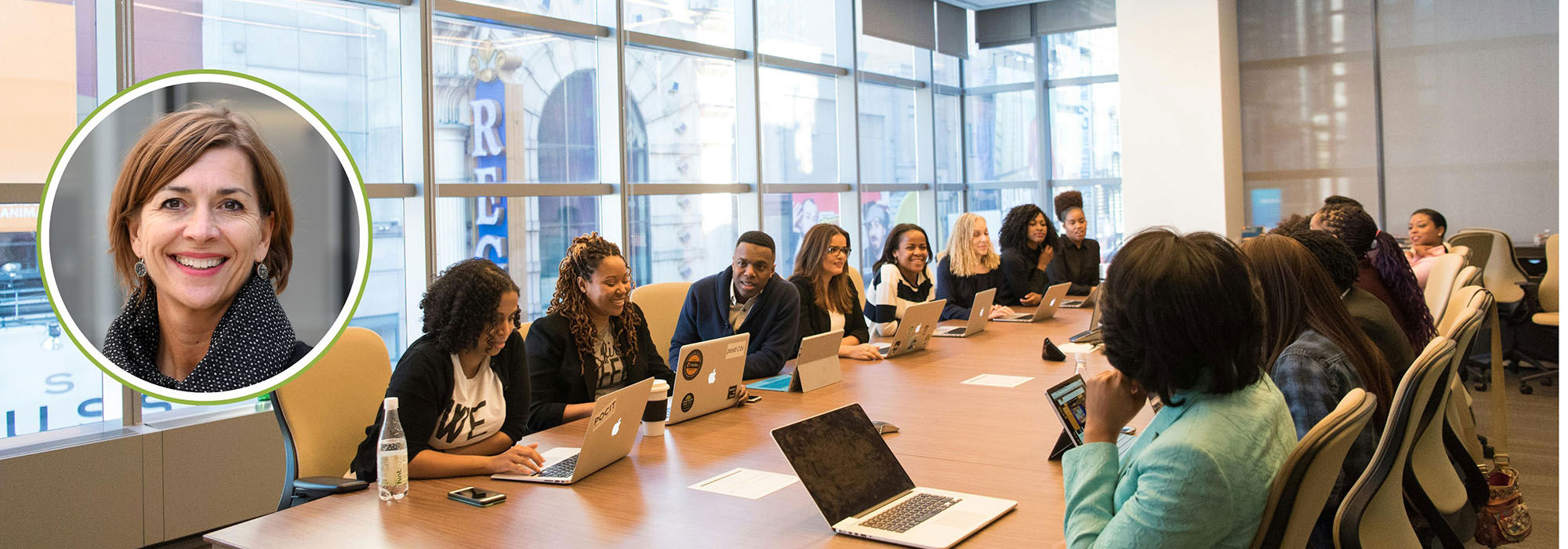
Some of today’s most significant strategic opportunities remain surprisingly underexplored, a question central to Inger G. Stensaker’s research on strategic change.
Driven by the real-life challenges that firms and managers face when implementing strategic change, Stensaker’s research is grounded in close collaboration with industry. Rather than starting from theoretical gaps, her work takes phenomena observed in organizations as its point of departure. Using qualitative methodologies, Stensaker seeks to capture how strategic change unfolds over time, and across organizational and hierarchical levels.
One of Stensaker’s current projects involves building a research agenda on Boards of Directors and their role in strategic change. Some aspects of the project include exploring the relationship between board members and the CEO, the managerial discretion perceived by new CEOs, and how the board influences this. She also aspires to observe and study internal board dynamics.
Stensaker finds this work very exciting and motivating. Not only does it extend our understanding of change capacity and show that even at the very top, commitment to change is not enough if the owners and the Board do not provide sufficient managerial discretion. This knowledge is directly implemented into the Board Programs at NHH Executive.
Another project currently being developed by Stensaker, focuses on the Silver Economy. This refers to the business opportunities within the aging society. According to Stensaker, the transition toward an aging society creates both significant societal challenges and opportunities.
“Norway, along with some 30 other western economies, will within the next five years have more elderly than young people, which makes us a superaged society. This will require tremendous societal transformations, and there is virtually no previous experience to build on,” she states.
Therefore, Stensaker and her team expect that industry and business will need to play a key role. This forms the basis for looking into two central areas: (1) successful aging at work which has to do with keeping elderly longer within the workforce and (2) innovative products and services targeting the aging population to enable healthy longevity (and staying longer at work).
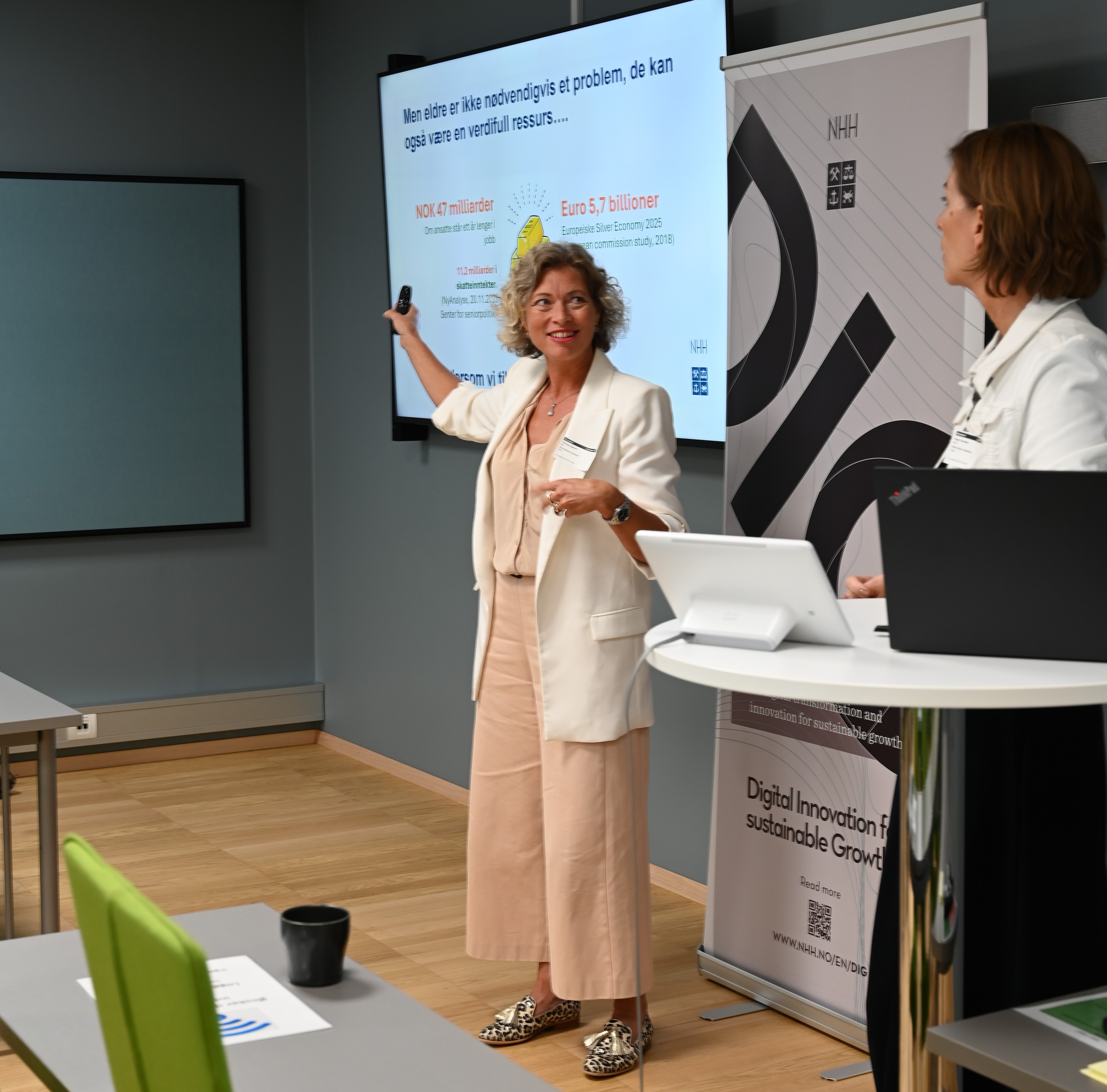
“The estimated value of the Silver Economy is 5.7 trillion euros, yet in general, Norwegian industry does not seem very interested, which is a mystery to us,” Stensaker says.
This is also reflected in one of the main challenges of the project. Stensaker explains that typically, they search for cases that allow them to showcase successful firms as an inspiration for others. So far, however, the team has not been able to identify many firms that proactively target the Silver Economy. Still, Stensaker is convinced that the Silver Economy will be an increasingly important topic.